One question. Seven answers.
If you describe BTS in the far future in 7 Korean characters?
What each member said
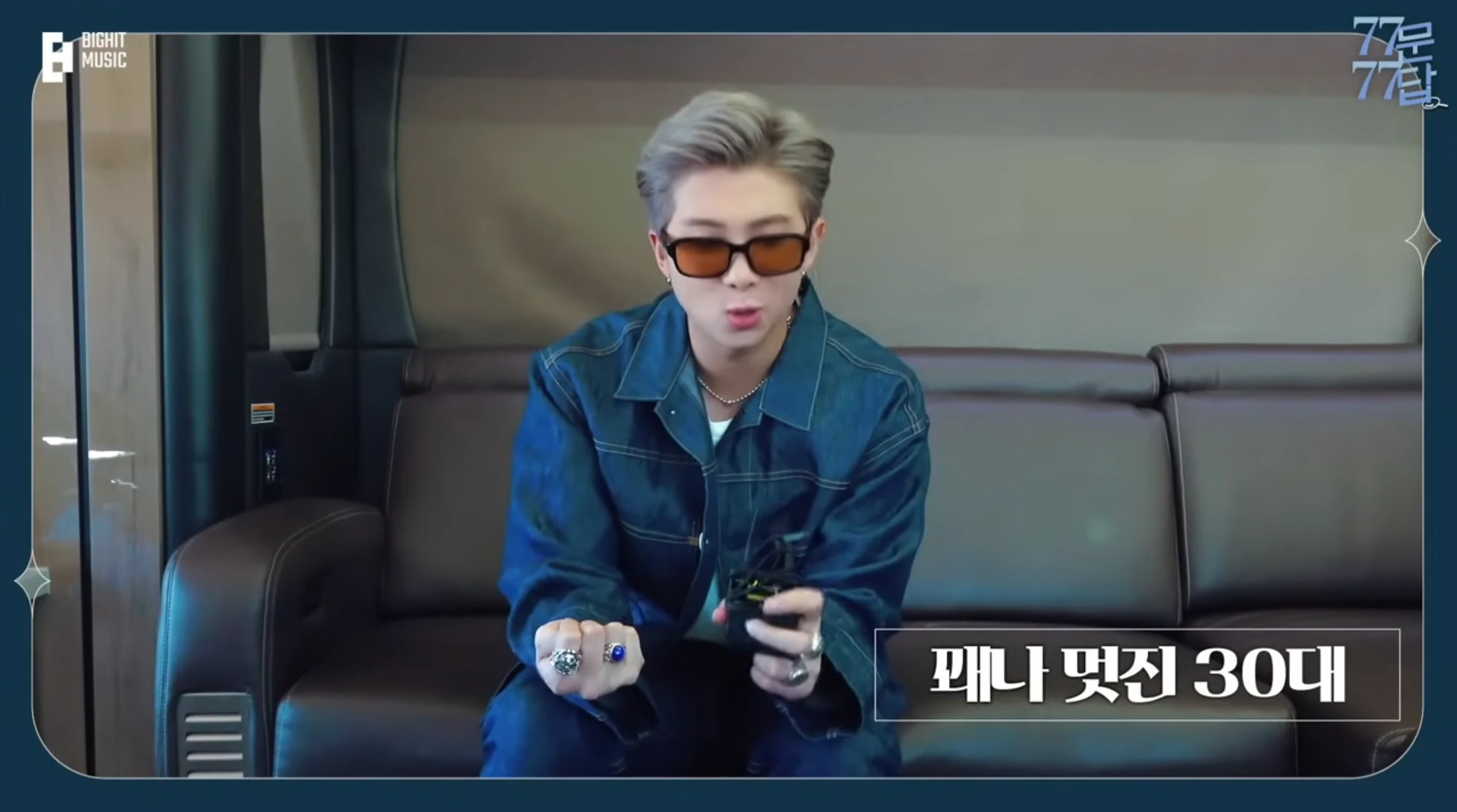
RM: 꽤나 멋진 30대
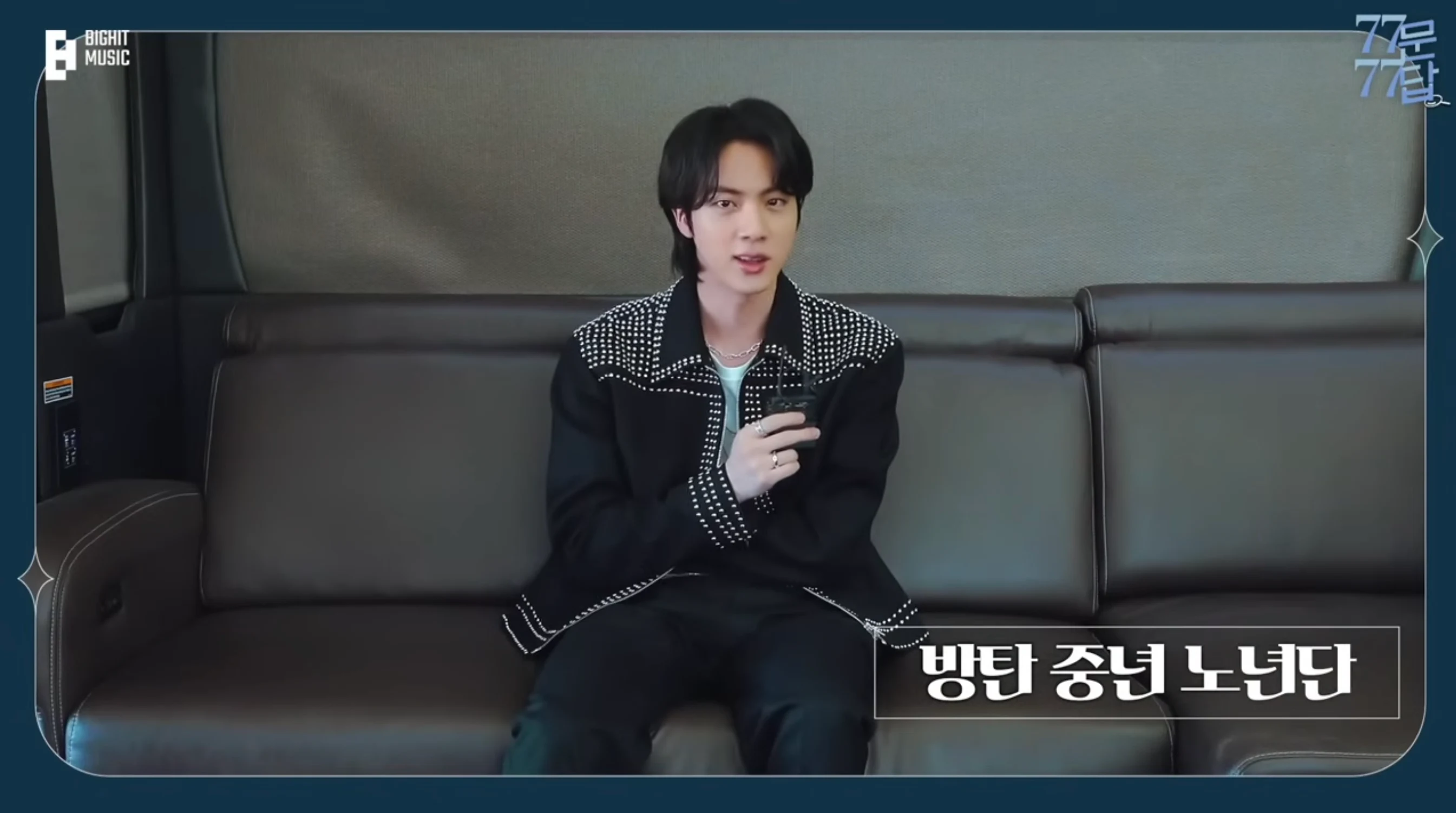
Jin: 방탄중년노년단
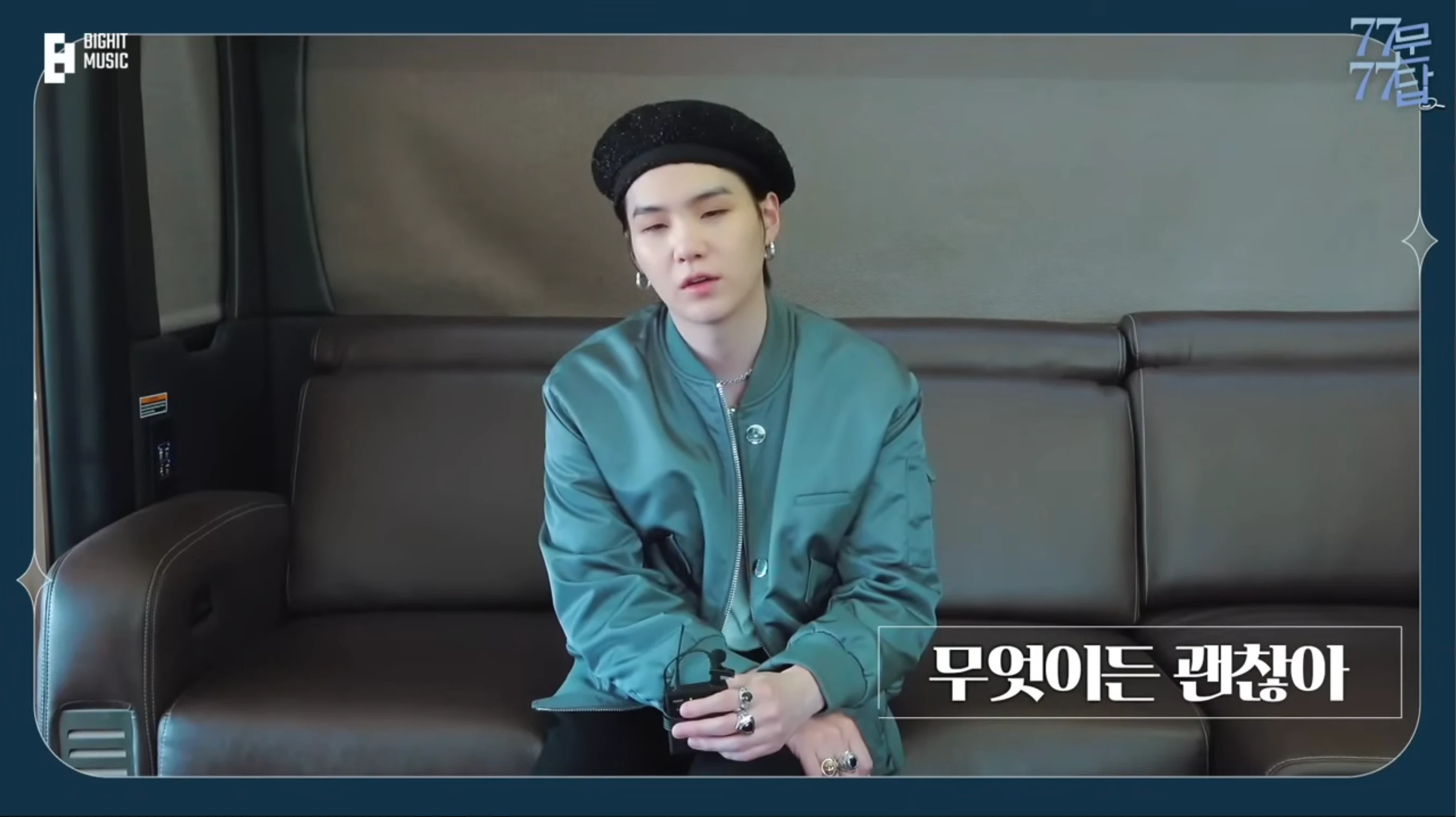
SUGA: 무엇이든 괜찮아.
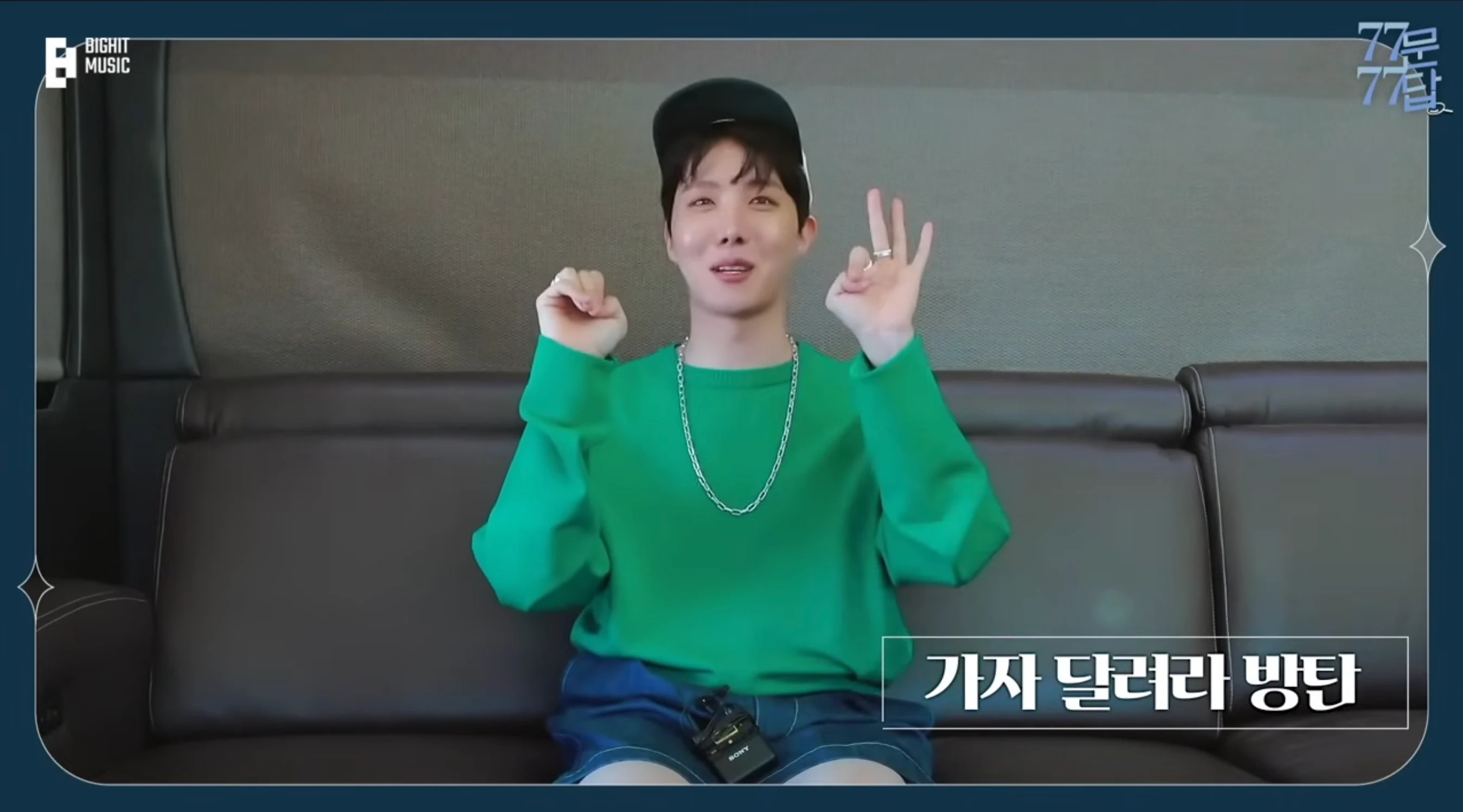
j-hope: 가자 달려라 방탄.
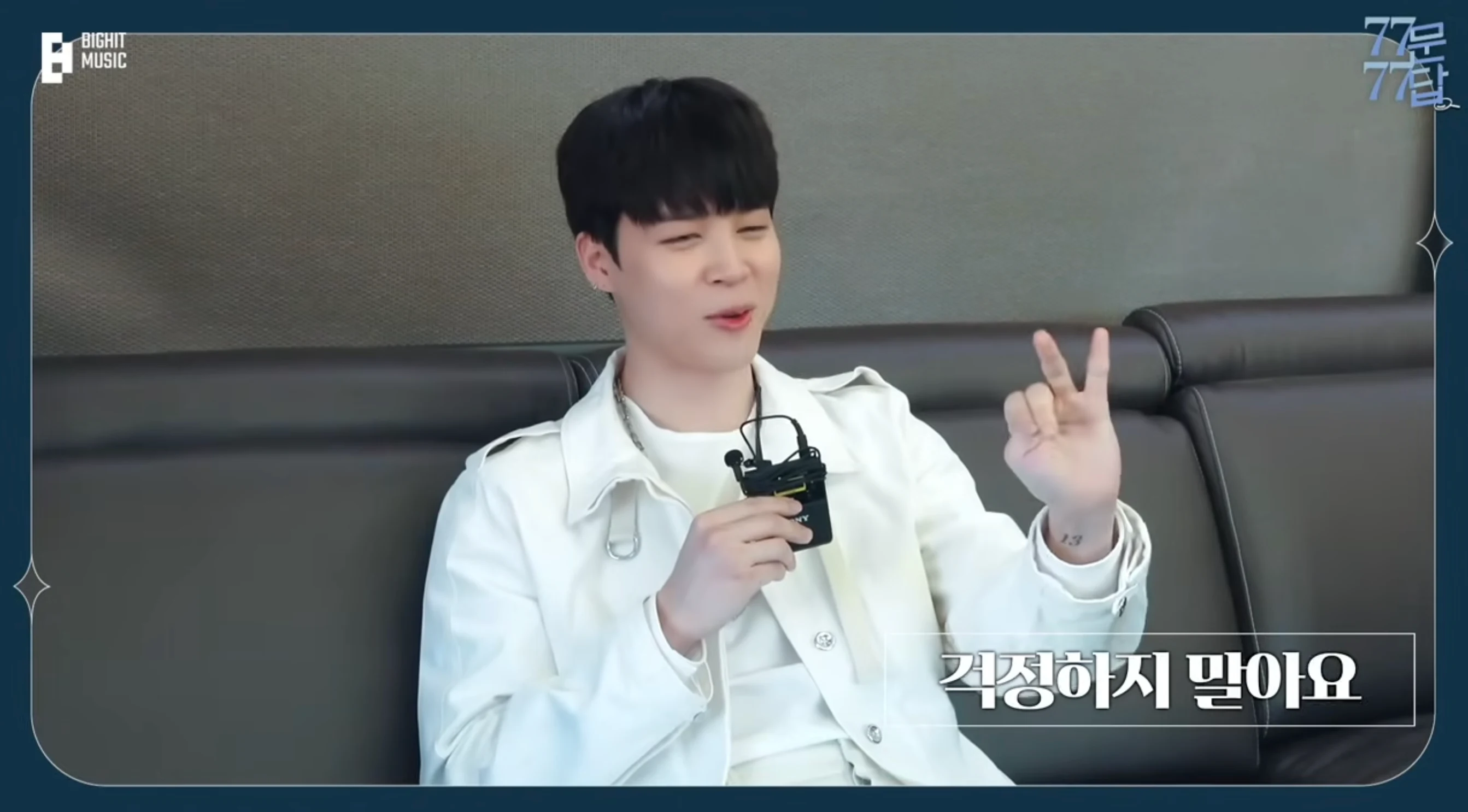
Jimin: 걱정하지 말아요.
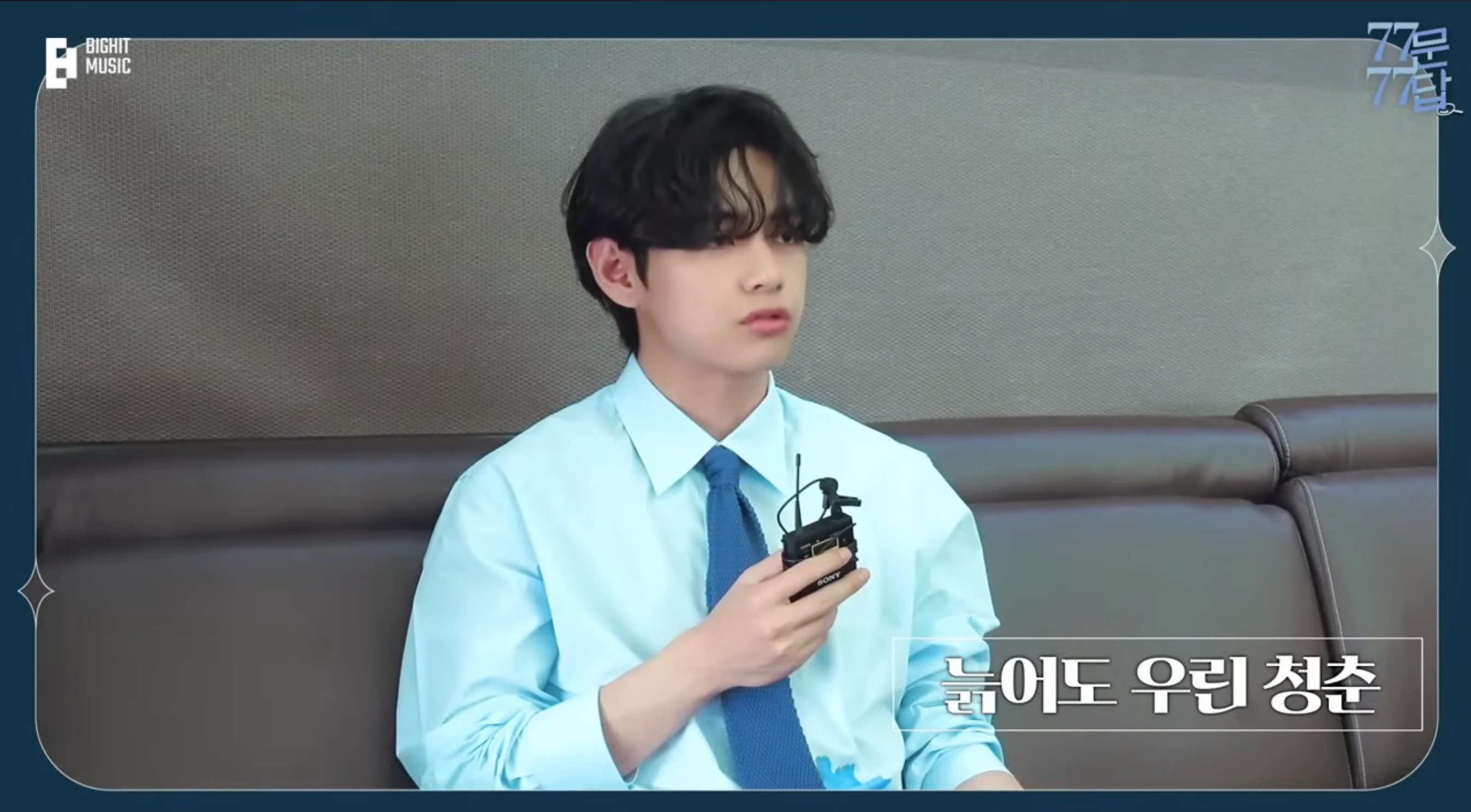
V: 늙어도 우린 청춘
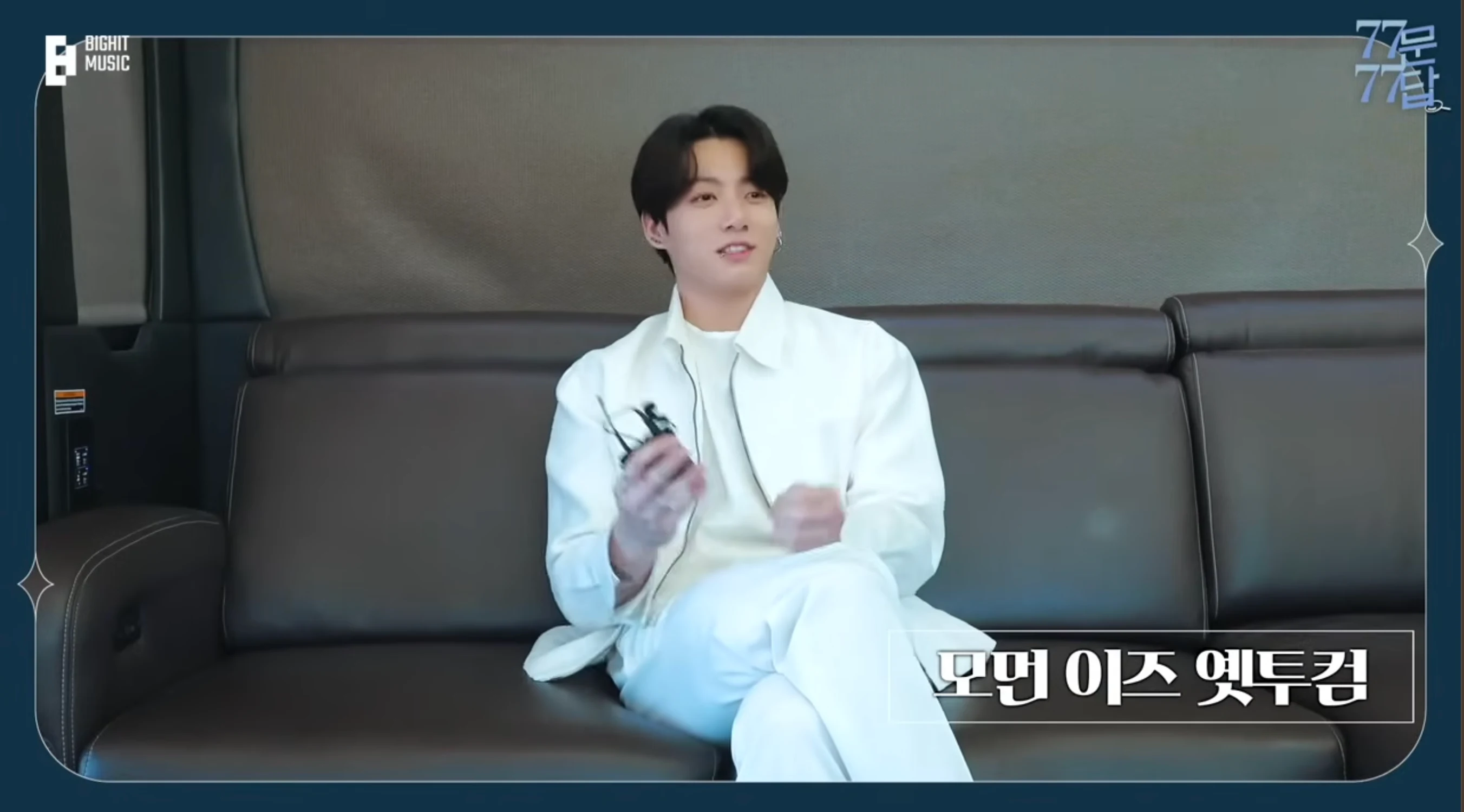
Jung Kook: 모먼 이즈 옛투컴
Jin: 방탄중년노년단
SUGA: 무엇이든 괜찮아.
j-hope: 가자 달려라 방탄.
Jimin: 걱정하지 말아요.
V: 늙어도 우린 청춘
Jung Kook: 모먼 이즈 옛투컴
RM — 꽤나 멋진 30대
꽤나 멋진 30대"A pretty cool group in our 30s."The key word is 꽤나.
It's not "very". It's more like:
"quite / pretty / more than you'd expect."Try these
꽤나 괜찮은데? = "That's pretty good."
꽤나 멋있다. = "That's kinda cool."
It's not "very". It's more like:
"quite / pretty / more than you'd expect."Try these
꽤나 괜찮은데? = "That's pretty good."
꽤나 멋있다. = "That's kinda cool."
Jin — 방탄중년노년단
방탄중년노년단"Bangtan Middle-aged & Elderly Squad."This is Korean humor
Take a serious-looking label and twist it.Pieces
중년 = middle age
노년 = old age / elderly
-단 = group / crew / squadYou can copy the pattern:
우리 ○○단 하자. = "Let's be the ○○ squad."
Take a serious-looking label and twist it.Pieces
중년 = middle age
노년 = old age / elderly
-단 = group / crew / squadYou can copy the pattern:
우리 ○○단 하자. = "Let's be the ○○ squad."
SUGA — 무엇이든 괜찮아.
무엇이든 괜찮아."Anything is fine."
(Whatever happens, it'll be okay.)Why it's useful
It removes pressure. It opens space.Tone switches
괜찮아. = casual, close
괜찮아요. = polite, gentle
괜찮습니다. = formal, official
(Whatever happens, it'll be okay.)Why it's useful
It removes pressure. It opens space.Tone switches
괜찮아. = casual, close
괜찮아요. = polite, gentle
괜찮습니다. = formal, official
j-hope — 가자 달려라 방탄.
가자 달려라 방탄."Let's go. Run, Bangtan."Two commands, two energies
가자 = "Let's go." (fast, strong, casual)
달려라 = "Run!" / "Keep going!" (cheering command)Real-life use
가자! = "Let's go!"
달려! = "Go go!" / "Push!"
가자 = "Let's go." (fast, strong, casual)
달려라 = "Run!" / "Keep going!" (cheering command)Real-life use
가자! = "Let's go!"
달려! = "Go go!" / "Push!"
Jimin — 걱정하지 말아요.
걱정하지 말아요."Don't worry." (soft + caring)The softness comes from the ending.
-지 말아요 feels gentler than a sharp command.Variations by distance
걱정하지 마. = close, casual
걱정하지 마요. = polite, still warm
걱정하지 마세요. = polite + "please" 느낌 (more formal)
-지 말아요 feels gentler than a sharp command.Variations by distance
걱정하지 마. = close, casual
걱정하지 마요. = polite, still warm
걱정하지 마세요. = polite + "please" 느낌 (more formal)
V — 늙어도 우린 청춘
늙어도 우린 청춘"Even if we get old, we're still youth."This is a classic Korean structure
~어도 = "even if / even though"More examples
늦어도 갈게요. = "Even if I'm late, I'll go."
비 와도 괜찮아. = "Even if it rains, it's fine."
~어도 = "even if / even though"More examples
늦어도 갈게요. = "Even if I'm late, I'll go."
비 와도 괜찮아. = "Even if it rains, it's fine."
Jung Kook — 모먼 이즈 옛투컴
모먼 이즈 옛투컴This is Korean "sound spelling" of English
"Moment is yet to come."Koreans often write English phrases like Korean sounds for fun / style.
It's a real part of modern tone.You'll see this in comments, captions, and casual writing
It's not "correct English."
It's Korean internet tone.
"Moment is yet to come."Koreans often write English phrases like Korean sounds for fun / style.
It's a real part of modern tone.You'll see this in comments, captions, and casual writing
It's not "correct English."
It's Korean internet tone.