
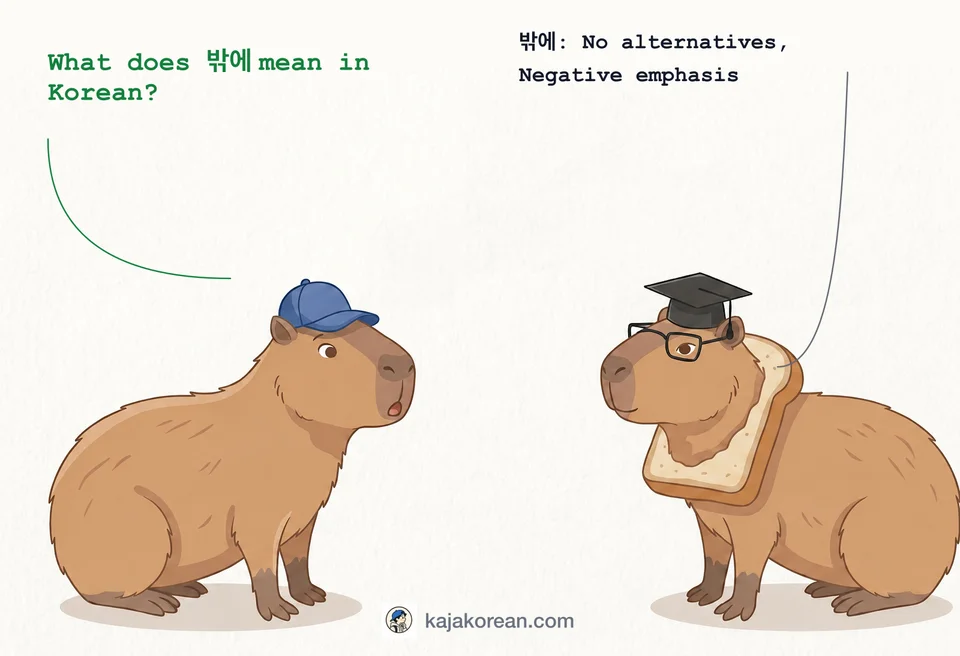
밖에(bakk-e, bakke)
밖에: expresses limitation meaning 'only' or 'nothing but'
When to use
Expressing limitation, Negative emphasis, No alternatives
The nuance
밖에 attaches after a noun to mean 'only' or 'nothing but,' emphasizing limitation. It is mainly used in negative sentences or situations expressing restriction, commonly in the form '~밖에 없다/없다' (there is only ~). For example, '나밖에 없다' means 'only I am here.' It is rarely used in positive sentences.