2026년 7월 2일
I Thought Learning Korean Was Vocabulary. Then I Found Its Emotional Layers
Language That Feels as Much as It Speaks
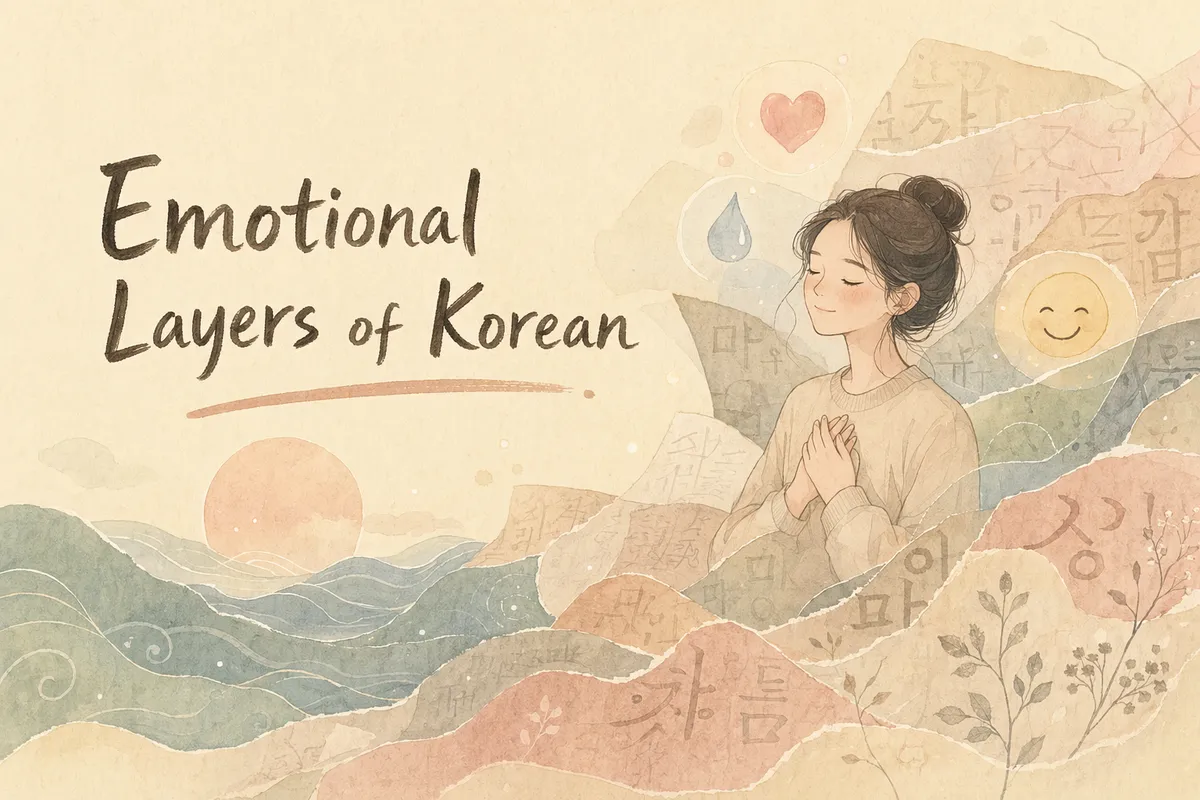
Most folks think learning Korean means memorizing word lists and nailing grammar rules. Makes sense, right? Language usually feels like a system you can crack with enough study. But Korean isn’t just building blocks you stack together. It’s more like expressing moods, feelings, and little emotional hints that don’t always show up clearly in other languages.Maybe that’s why even people who are pretty fluent sometimes get stuck. They know the words and grammar but still don’t catch what native speakers really mean. Korean phrases often carry hidden feelings underneath, and textbooks rarely teach that part.
The Emotional Nuances That Defy Simple Explanation
Take small sounds like “아,” “어,” or “아이구.” They seem tiny but can show surprise, sadness, or sympathy depending on how you say them. These aren’t just words; they’re emotional signals woven into everyday talk.Most learners get confused because English doesn’t have exact matches. You can’t just look them up and fully understand. This shows Korean is less about strict rules and more about sensing the moment, listening carefully, and catching subtle clues—things that only come with time and practice.
Contradictions in Meaning Are Part of the Language’s Charm
Here’s a fun but frustrating thing: some words have multiple, even opposite meanings. Like 쓰다—it can mean “to write,” “to wear,” or “to taste bitter.” That’s a lot to handle in one word.Korean expects you to lean on the situation to figure out what’s meant. Trying to pin down one meaning can mess you up. You have to get used to ambiguity as a normal thing. It’s a different way of thinking than what many language learners expect. It’s looser, more flexible, and richer.
The Role of Intonation and Regional Variation
Then there’s intonation and dialects. Korean in Seoul sounds different from Korean in Busan or Jeju Island. It’s not just an accent thing; it adds a cultural layer that changes what people mean.If you study Korean in one place, you might be thrown off when you go somewhere else. Korean isn’t fixed or uniform. It lives and changes with its speakers and their regions. Getting comfortable with this variety is really important if you want to understand Korean beyond the textbook version.
Why “Just Knowing Grammar” Will Never Be Enough
Grammar books help you make sentences, sure. But they won’t teach you how words carry feelings. Words like “진짜” or “정말” might look like simple intensifiers, but depending on your tone and the situation, they can show sincerity, frustration, or surprise.Language isn’t just rules. It’s about feelings and relationships. If you stick to grammar only, you miss what makes Korean expressive and real.
When Learning Becomes Living
At some point, you stop treating Korean like a puzzle to solve and start living with it. Then it stops being just words and becomes a way to express what’s inside you.Korean can share emotional truths in ways other languages might not—sometimes even through silence or small sounds. You have to spend time listening to how people really talk and accept that confusion is part of learning. It’s not easy, but that’s the payoff.
Closing Thoughts
Korean isn’t just a language to memorize. It pulls you into a unique mix of feelings and culture. To really get it, you have to accept its contradictions, subtle emotions, and cultural details. Knowing words and grammar isn’t enough—you have to learn to feel the language, not just say it.한국어는 그냥 단어와 문법의 언어가 아니에요. 마음으로 느끼는 언어입니다.