기다리다 vs 참다: The Difference Between Waiting and Enduring

기다리다 (gi-da-ri-da, gidarida) · 참다 (cham-da, chamda)

기다리다 means to spend time hoping for something to happen, while 참다 means to endure pain or discomfort.

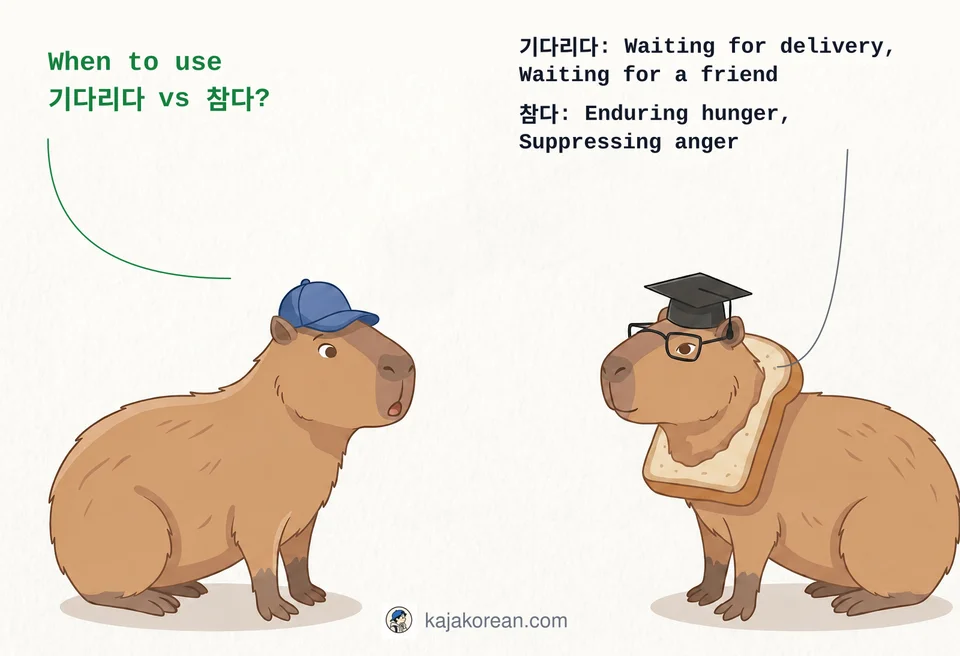
Comparison between Korean verbs 기다리다 and 참다 showing waiting vs enduring

Word-by-word breakdown

One lane per word — no nested boxes, just the gist.

기다리다(gi-da-ri-da, gidarida)

To spend time hoping or expecting something to happen

When to use

Waiting for appointment time, Waiting for delivery, Waiting for a friend

The nuance

기다리다 is used when someone spends time until a person, event, or situation arrives or happens. It usually expresses positive expectation or simply the passage of time.

참다(cham-da, chamda)

To endure or suppress pain, discomfort, or emotions

When to use

Enduring hunger, Suppressing anger, Tolerating cold weather

The nuance

참다 is used for enduring or suppressing physical pain or psychological emotions. It focuses on tolerating negative situations or feelings.

Real-world examples

  • 나는 친구를 30분 동안 기다렸다.

    na-neun chin-gu-reul 30bun dong-an gi-da-ryeoss-da., na neun chin gu reul 30bun dong an gi da ryeoss da.

    A typical use of 기다리다, appropriate for waiting for someone for a period of time.

  • 나는 배가 고파서 참았다.

    na-neun bae-ga go-pa-seo cham-ass-da., na neun bae ga go pa seo cham ass da.

    참다 is used to endure physical pain or discomfort, so it fits enduring hunger.

  • 나는 친구를 참았다.

    na-neun chin-gu-reul cham-ass-da., na neun chin gu reul cham ass da.

    Saying '참다' for a friend is unnatural; waiting for a friend requires '기다리다'.

  • 추운 날씨를 기다렸다.

    chu-un nal-ssi-reul gi-da-ryeoss-da., chu un nal ssi reul gi da ryeoss da.

    Cold weather is something to endure, so '참다' is appropriate, '기다리다' is not.

  • 약속 시간이 늦어져서 참았다.

    yak-sok si-gan-i neuj-eo-jyeo-seo cham-ass-da., yak sok si gan i neuj eo jyeo seo cham ass da.

    Delays in appointment time are waiting situations, so '기다리다' fits, '참다' does not.

  • 나는 화가 나서 참을 수 없었다.

    na-neun hwa-ga na-seo cham-eul su eop-eoss-da., na neun hwa ga na seo cham eul su eop eoss da.

    A typical example of using '참다' to suppress emotions.

  • 택배가 올 때까지 참았다.

    taek-bae-ga ol ttae-kka-ji cham-ass-da., taek bae ga ol ttae kka ji cham ass da.

    For waiting for delivery, '기다리다' should be used; '참다' is inappropriate.

  • 나는 감정을 기다렸다.

    na-neun gam-jeong-eul gi-da-ryeoss-da., na neun gam jeong eul gi da ryeoss da.

    Emotions are not something to wait for, so '기다리다' is incorrect; '참다' is correct.

Quick quiz

  1. Until the friend arrives, I ___.

    친구가 올 때까지 ___.(chin-gu-gaolttae-kka-ji___., chingugaolttaekkaji___.)
  2. Even though it hurts, I ___.

    아픈데도 ___.(a-peun-de-do___., apeundedo___.)
  3. I am ___ for the delivery to arrive.

    택배가 오기를 ___ 있다.(taek-bae-gao-gi-reul___iss-da., taekbaegaogireul___issda.)
  4. When angry, I cannot ___ my emotions.

    화가 날 때 감정을 ___ 수 없다.(hwa-ganalttaegam-jeong-eul___sueop-da., hwaganalttaegamjeongeul___sueopda.)

More comparisons to explore

View all word comparisons →