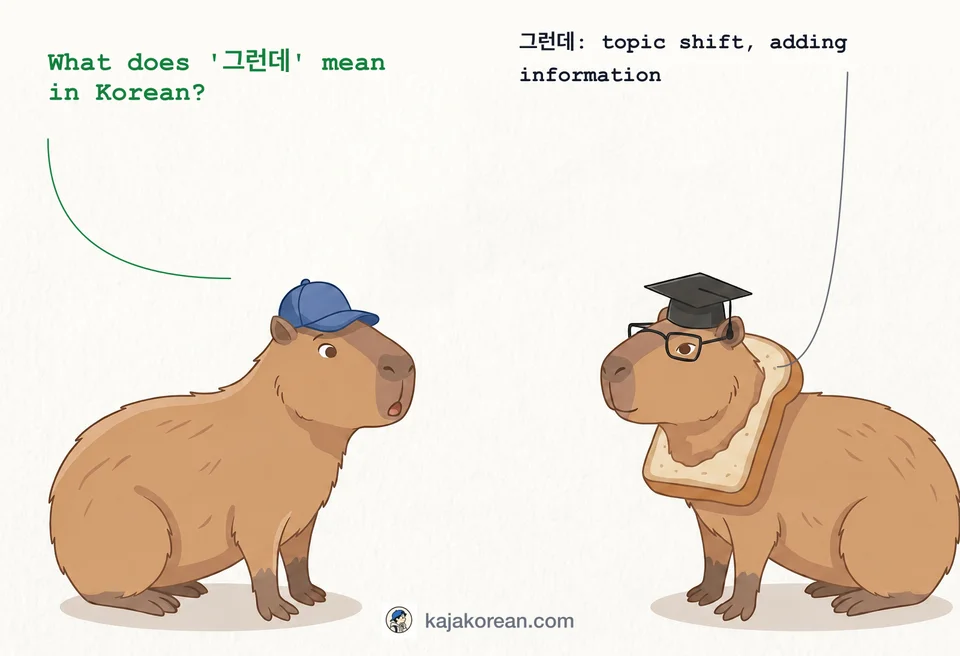
What does 그런데 mean?

그런데 (geu-reon-de, geureonde)

‘그런데’ is a key connector used to shift topics or add information in conversations and writing.

Korean word 그런데 meaning topic shift or contrast

Definition & nuance

Core meaning and shades learners miss.

그런데(geu-reon-de, geureonde)

‘그런데’ is a conjunctive adverb used to connect previous content while introducing a new situation or contrast.

Nuances

  • Conveys contrast or twist beyond simple connection
  • Smoothly continues conversation flow
  • Suitable for polite and formal contexts

When to use

topic shift, adding information, explaining contrast

In context

‘그런데’ typically appears in the middle or beginning of a sentence to smoothly connect preceding and following sentences. It is used in both spoken and written Korean and is appropriate in formal contexts.

Real-world examples

  • 저는 커피를 좋아해요. 그런데 오늘은 차를 마시고 싶어요.

    jeo-neun keo-pi-reul joh-a-hae-yo. geu-reon-de o-neul-eun cha-reul ma-si-go sip-eo-yo., jeo neun keo pi reul joh a hae yo. geu reon de o neul eun cha reul ma si go sip eo yo.

    ‘그런데’ naturally connects a contrasting situation to the previous sentence.

  • 어제는 비가 왔어요 그런데 오늘은 맑아요.

    eo-je-neun bi-ga wass-eo-yo geu-reon-de o-neul-eun mak-a-yo., eo je neun bi ga wass eo yo geu reon de o neul eun mak a yo.

    Clearly expresses contrast over time.

  • 그는 학생입니다 그런데 선생님이에요.

    geu-neun hak-saeng-ip-ni-da geu-reon-de seon-saeng-nim-i-e-yo., geu neun hak saeng ip ni da geu reon de seon saeng nim i e yo.

    ‘그런데’ clearly shows contrast between two facts.

  • 나는 밥을 먹었는데 그리고 친구는 안 먹었어요.

    na-neun bap-eul meok-eoss-neun-de geu-ri-go chin-gu-neun an meok-eoss-eo-yo., na neun bap eul meok eoss neun de geu ri go chin gu neun an meok eoss eo yo.

    ‘그리고’ should be used instead of ‘그런데’, and ‘는데’ and ‘그리고’ are not used together.

  • 오늘은 바빠요. 그런데 내일은 시간이 있어요.

    o-neul-eun ba-ppa-yo. geu-reon-de nae-il-eun si-gan-i iss-eo-yo., o neul eun ba ppa yo. geu reon de nae il eun si gan i iss eo yo.

    Smoothly connects changes in situation over time.

  • 그는 열심히 공부했는데 그래서 시험에 합격했어요.

    geu-neun yeol-sim-hi gong-bu-haess-neun-de geu-rae-seo si-heom-e hap-gyeok-haess-eo-yo., geu neun yeol sim hi gong bu haess neun de geu rae seo si heom e hap gyeok haess eo yo.

    ‘그래서’ is appropriate for cause and effect, not ‘그런데’.

Quick quiz

  1. What is the most appropriate use of ‘그런데’?

    ‘그런데’의 가장 적절한 쓰임은 무엇인가요?(‘geu-reon-de’uiga-jangjeok-jeol-hansseu-im-eunmu-eos-in-ga-yo?, ‘geureonde’uigajangjeokjeolhansseuimeunmueosingayo?)
  2. Which sentence uses ‘그런데’ correctly?

    다음 문장 중 ‘그런데’가 올바르게 쓰인 문장은?(da-eummun-jangjung‘geu-reon-de’gaol-ba-reu-gesseu-inmun-jang-eun?, daeummunjangjung‘geureonde’gaolbareugesseuinmunjangeun?)
  3. Where does ‘그런데’ usually appear in a sentence?

    ‘그런데’는 어떤 문장 위치에 주로 옵니까?(‘geu-reon-de’neuneo-tteonmun-jangwi-chi-eju-roop-ni-kka?, ‘geureonde’neuneotteonmunjangwichiejuroopnikka?)

More meaning guides

View all meaning guides →