
concept rows · concept, grammar, time
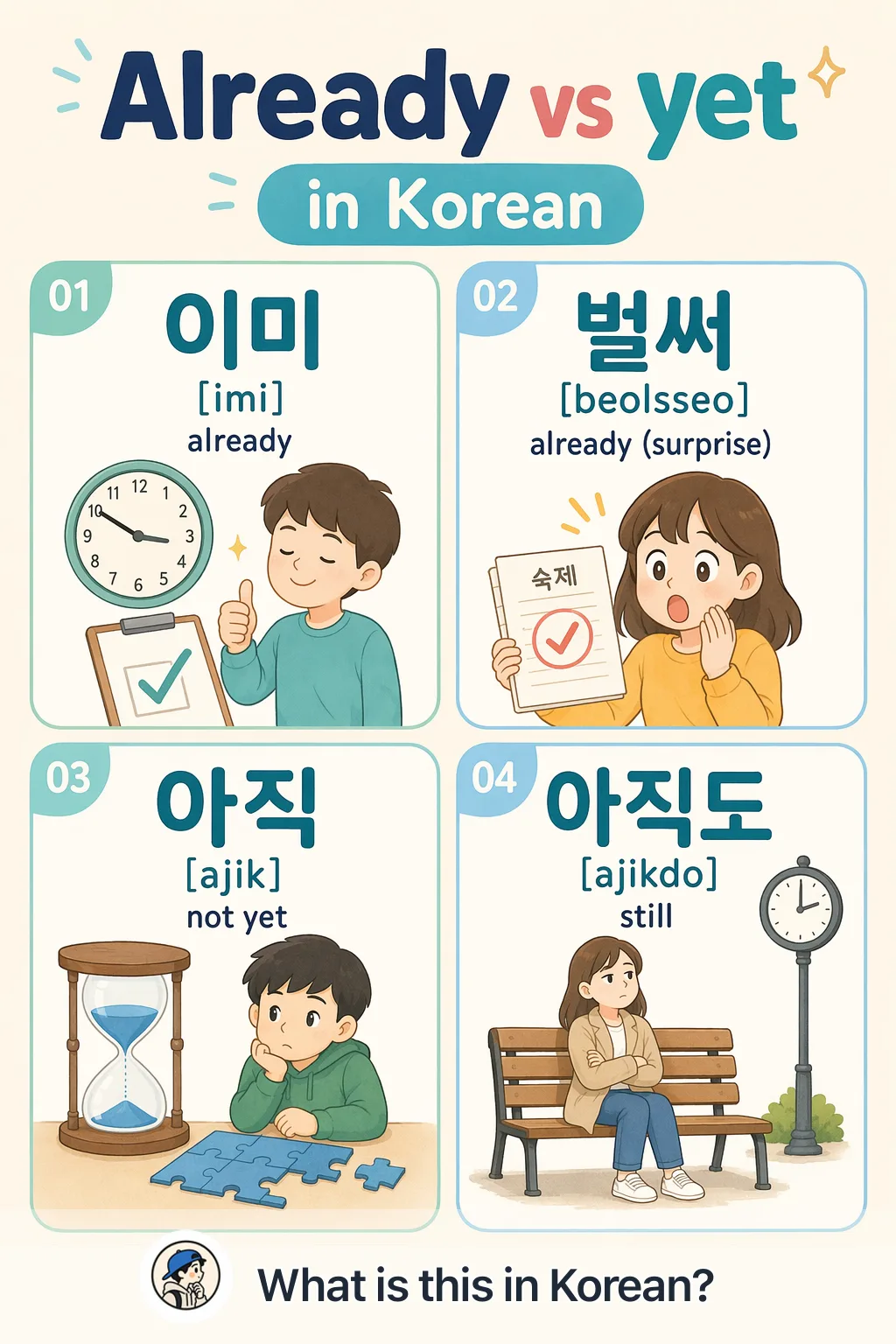
Already vs yet in Korean
Confused about "already" vs "yet" in Korean? 🔴 이미 [imi] - already (fact)
How these words work together
In Korean, 이미 and 벌써 both mean "already," but 벌써 is used when something happened sooner than expected or with surprise. 아직 means "not yet," indicating something has not happened up to now. 아직도 means "still," showing that something continues to happen or remain the same. These words help express time and expectations clearly in daily conversations.
Words in this chart
| Korean | Romanization | English |
|---|---|---|
| 이미 | imi | already |
| 벌써 | beolsseo | already (surprise) |
| 아직 | ajik | not yet |
| 아직도 | ajikdo | still |
Example sentences
나는 이미 숙제를 했어요.
I already did my homework.
벌써 저녁 먹었어요?
Did you already have dinner? (with surprise)
아직 숙제를 안 했어요.
I haven't done my homework yet.
Practice these words in context? Open the vocab quiz · Browse how-to-say word guides.