
concept rows · concept, grammar, modality
Can vs may nuance in Korean
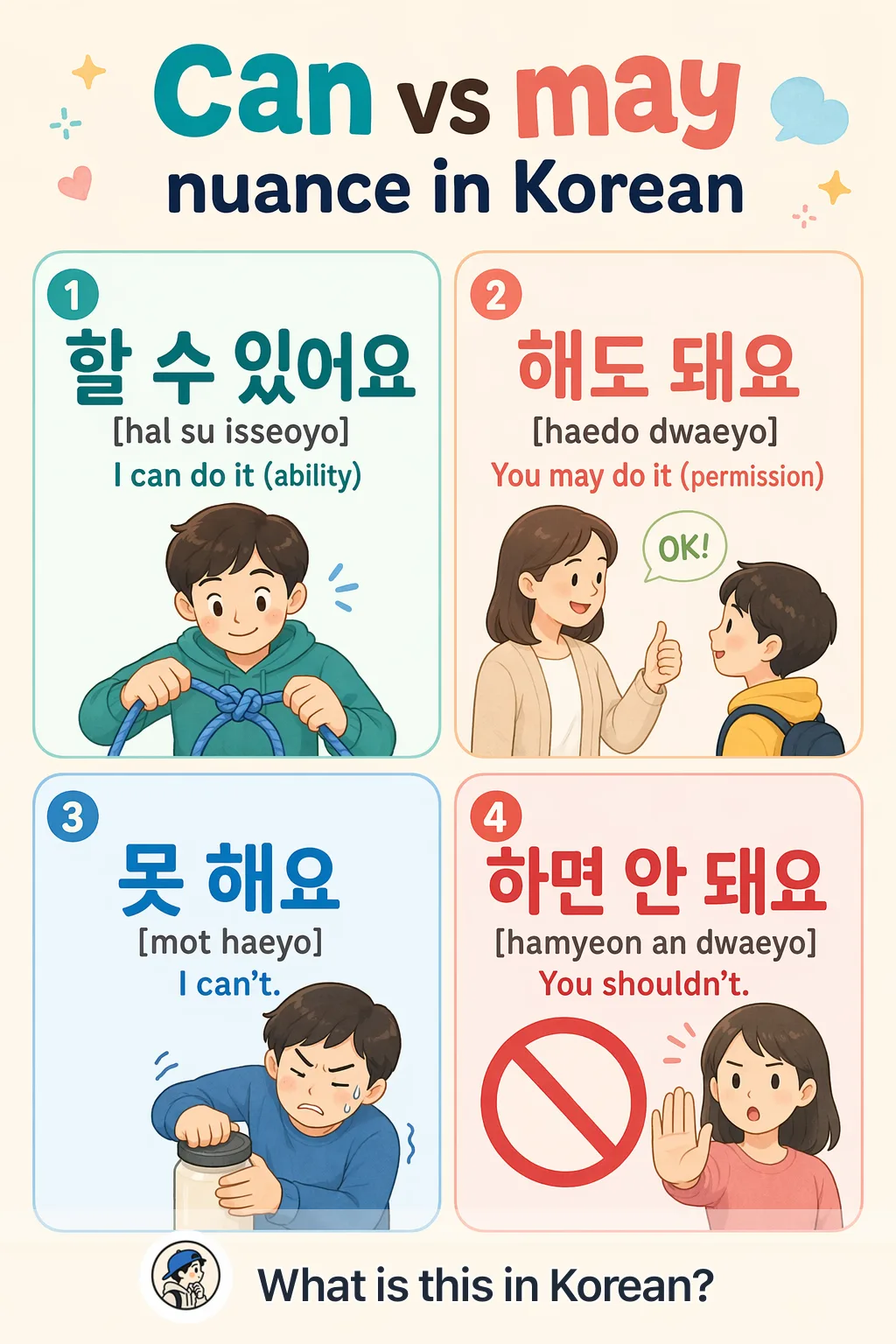
Can vs May in Korean? Here's the quick difference: 🔴 할 수 있어요 [hal su isseoyo] - I can do it (ability)
How these words work together
In Korean, 'can' and 'may' express ability and permission, but they have different nuances. '할 수 있어요' shows you have the ability to do something. '해도 돼요' means you have permission to do it. Negative forms like '못 해요' and '하면 안 돼요' express inability and prohibition, respectively.
Words in this chart
| Korean | Romanization | English |
|---|---|---|
| 할 수 있어요 | hal su isseoyo | I can do it (ability) |
| 해도 돼요 | haedo dwaeyo | You may do it (permission) |
| 못 해요 | mot haeyo | I can't |
| 하면 안 돼요 | hamyeon an dwaeyo | You shouldn't |
Example sentences
저는 한국어를 할 수 있어요.
I can speak Korean.
여기서 사진을 찍어도 돼요?
May I take pictures here?
지금은 휴대폰을 사용하면 안 돼요.
You shouldn't use your phone now.
Practice these words in context? Open the vocab quiz · Browse how-to-say word guides.