
topik upgrade · topik, verbs, problem
Problems & solutions: TOPIK I → II in Korean
Upgrade your Korean from TOPIK I to II with these pairs 👇 🔴 문제 [munje] - problem
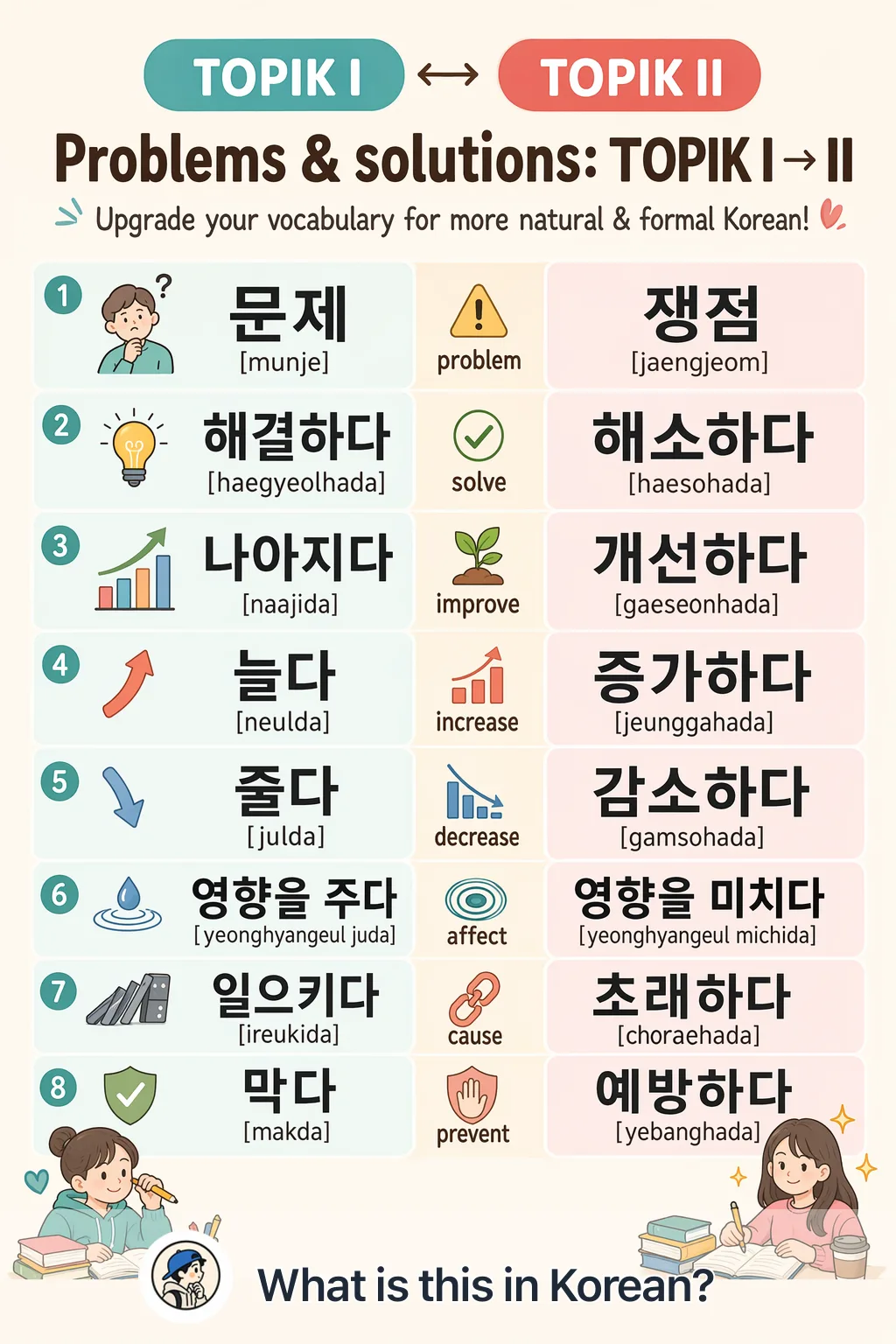
How these words work together
This chart shows pairs of Korean verbs used to talk about problems and solutions, comparing words from TOPIK I and TOPIK II levels. Each pair has a similar meaning but is used at different proficiency levels. For example, '문제' and '쟁점' both mean 'problem,' but '문제' is common in TOPIK I, while '쟁점' is more advanced for TOPIK II. Learning these pairs helps you upgrade your Korean vocabulary as you move from beginner to intermediate levels.
Words in this chart
| Korean | Romanization | English |
|---|---|---|
| 문제 | munje | problem (TOPIK I) |
| 쟁점 | jaengjeom | problem (TOPIK II) |
| 해결하다 | haegyeolhada | solve (TOPIK I) |
| 해소하다 | haesohada | solve (TOPIK II) |
| 나아지다 | naajida | improve (TOPIK I) |
| 개선하다 | gaeseonhada | improve (TOPIK II) |
| 늘다 | neulda | increase (TOPIK I) |
| 증가하다 | jeunggahada | increase (TOPIK II) |
| 줄다 | julda | decrease (TOPIK I) |
| 감소하다 | gamsohada | decrease (TOPIK II) |
| 영향을 주다 | yeonghyangeul juda | affect (TOPIK I) |
| 영향을 미치다 | yeonghyangeul michida | affect (TOPIK II) |
| 일으키다 | ireukida | cause (TOPIK I) |
| 초래하다 | choraehada | cause (TOPIK II) |
| 막다 | makda | prevent (TOPIK I) |
| 예방하다 | yebanghada | prevent (TOPIK II) |
Example sentences
이 문제를 빨리 해결해야 해요.
We need to solve this problem quickly.
환경 오염은 중요한 쟁점이에요.
Environmental pollution is an important issue.
운동을 해서 건강이 많이 나아졌어요.
My health has improved a lot by exercising.
Practice these words in context? Open the vocab quiz · Browse how-to-say word guides.