
나중에(na-jung-e, najunge)
After some time, mainly used in everyday spoken Korean
When to use
casual conversation, friendly plans, informal scheduling
The nuance
Used naturally in conversations or daily situations to refer to some future time.
나중에 (na-jung-e, najunge) · 후에 (hu-e, hue)
나중에 is a casual, commonly used spoken expression for 'later,' while 후에 is more formal and fits written or official contexts.
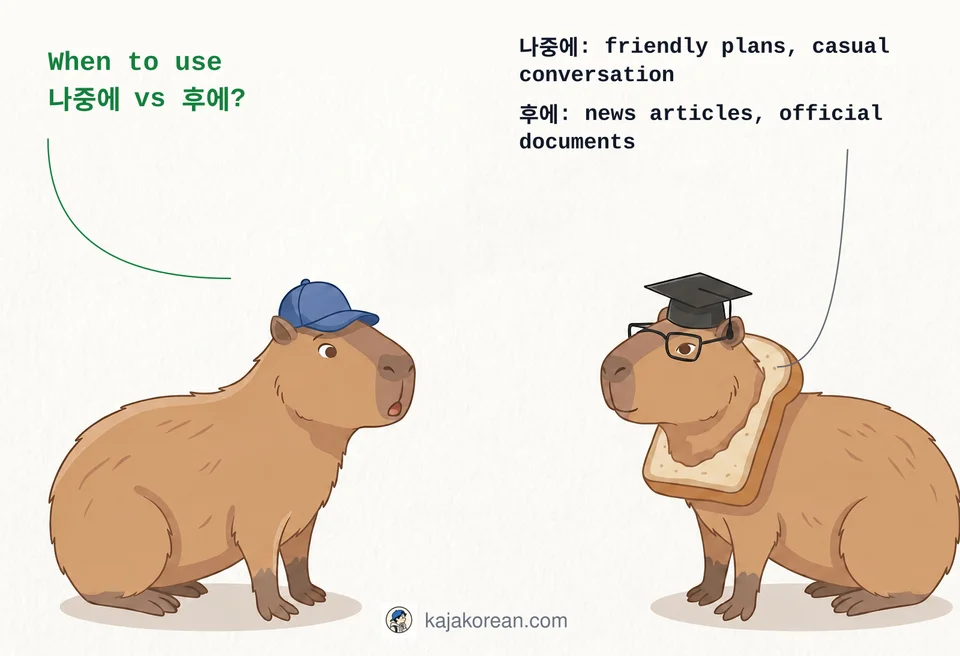
One lane per word — no nested boxes, just the gist.
After some time, mainly used in everyday spoken Korean
When to use
casual conversation, friendly plans, informal scheduling
The nuance
Used naturally in conversations or daily situations to refer to some future time.
After an event or time, suitable for formal or written contexts
When to use
official documents, news articles, academic presentations
The nuance
Used in documents, news, or official announcements to clearly indicate chronological order.
나중에 만나서 이야기하자.
na-jung-e man-na-seo i-ya-gi-ha-ja., na jung e man na seo i ya gi ha ja.
A natural sentence expressing a future meeting in casual conversation.
회의 후에 결정을 내리겠습니다.
hoe-ui hu-e gyeol-jeong-eul nae-ri-gess-seup-ni-da., hoe ui hu e gyeol jeong eul nae ri gess seup ni da.
A formal expression clearly indicating the sequence of events.
후에 친구와 놀러 갈 거야.
hu-e chin-gu-wa nol-reo gal geo-ya., hu e chin gu wa nol reo gal geo ya.
In casual spoken contexts, '나중에' fits better than '후에'.
나중에 보고서를 제출하세요.
na-jung-e bo-go-seo-reul je-chul-ha-se-yo., na jung e bo go seo reul je chul ha se yo.
In official documents or instructions, '후에' is more appropriate.
시험 후에 결과를 알 수 있어요.
si-heom hu-e gyeol-gwa-reul al su iss-eo-yo., si heom hu e gyeol gwa reul al su iss eo yo.
Clearly indicates the time sequence after the exam ends.
나중에 결과를 알 수 있어요.
na-jung-e gyeol-gwa-reul al su iss-eo-yo., na jung e gyeol gwa reul al su iss eo yo.
Natural in everyday contexts meaning you will know the result later.
후에 전화할게.
hu-e jeon-hwa-hal-ge., hu e jeon hwa hal ge.
For informal promises, '나중에' sounds more natural.
나중에 회의가 끝난 후에 보고할게.
na-jung-e hoe-ui-ga kkeut-nan hu-e bo-go-hal-ge., na jung e hoe ui ga kkeut nan hu e bo go hal ge.
Using both '나중에' and '후에' together is redundant and awkward.
Which expression is natural when making plans with a friend?
Which expression is appropriate for indicating time order in official documents?
Which sentence is incorrect for expressing informal promises?
What does it mean?