
여기(yeo-gi, yeogi)
A casual term indicating a place near the speaker
When to use
Casual conversation, Near speaker, Friendly context
The nuance
Used to point to a place near the speaker during conversation; natural in spoken language.
여기 (yeo-gi, yeogi) · 이곳 (i-gos, igos)
'여기' is casual and conversational, while '이곳' fits formal and written contexts.
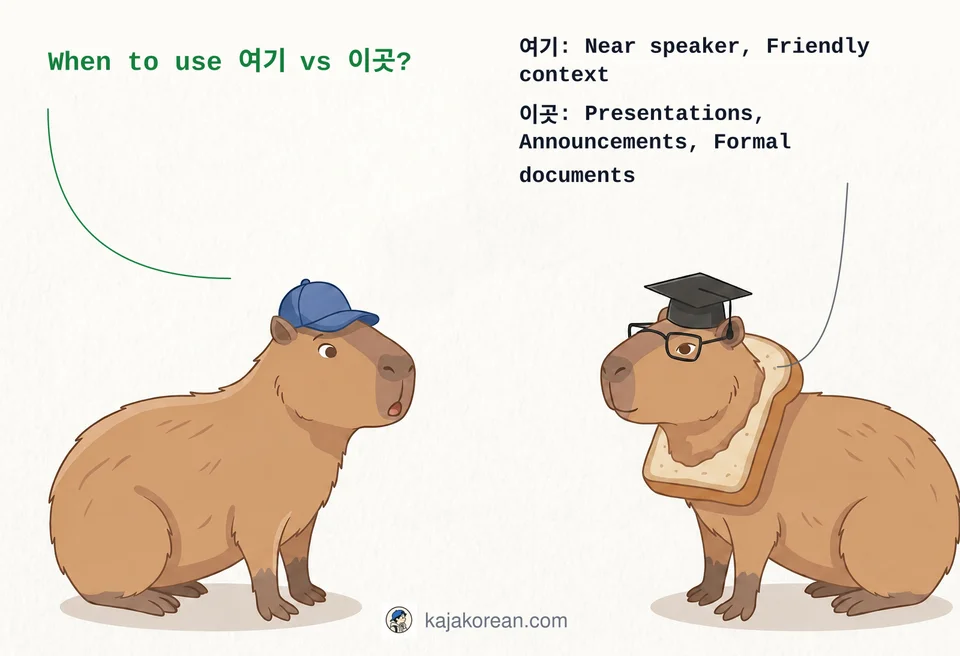
One lane per word — no nested boxes, just the gist.
A casual term indicating a place near the speaker
When to use
Casual conversation, Near speaker, Friendly context
The nuance
Used to point to a place near the speaker during conversation; natural in spoken language.
Used to refer formally or in writing to a specific place known to speaker and listener
When to use
Formal documents, Presentations, Announcements
The nuance
Appropriate for formal situations like documents, presentations, or announcements when referring to a location.
여기 앉으세요.
yeo-gi an-eu-se-yo., yeo gi an eu se yo.
Natural spoken expression indicating a place near the speaker.
이곳 앉으세요.
i-gos an-eu-se-yo., i gos an eu se yo.
'이곳' is formal and written style; sounds awkward in a casual command.
여기 날씨가 좋아요.
yeo-gi nal-ssi-ga joh-a-yo., yeo gi nal ssi ga joh a yo.
Appropriate for casual speech referring to the speaker's location.
이곳 날씨가 좋아요.
i-gos nal-ssi-ga joh-a-yo., i gos nal ssi ga joh a yo.
Natural in formal writing or presentations referring to a specific place.
여기서 기다려 주세요.
yeo-gi-seo gi-da-ryeo ju-se-yo., yeo gi seo gi da ryeo ju se yo.
'여기' is the most common spoken word to indicate location.
이곳서 기다려 주세요.
i-gos-seo gi-da-ryeo ju-se-yo., i gos seo gi da ryeo ju se yo.
'이곳' must be followed by '에서'; rarely used in spoken language.
이곳은 박물관입니다.
i-gos-eun bak-mul-gwan-ip-ni-da., i gos eun bak mul gwan ip ni da.
Suitable for formal and written descriptive sentences.
여기는 박물관입니다.
yeo-gi-neun bak-mul-gwan-ip-ni-da., yeo gi neun bak mul gwan ip ni da.
Natural in casual spoken explanations.
Which is appropriate for referring to a place in a formal announcement?
Which is natural when telling a friend 'Wait at this spot'?
Which fits better in a written formal sentence?
Which word does the speaker use to indicate a nearby place?
What does it mean?