말하다 vs 이야기하다: Nuance Differences in Speaking

말하다 (mal-ha-da, malhada) · 이야기하다 (i-ya-gi-ha-da, iyagihada)

‘말하다’ refers to general speaking, while ‘이야기하다’ emphasizes conversational exchange or storytelling.

Comparison of Korean verbs 말하다 and 이야기하다 usage

Word-by-word breakdown

One lane per word — no nested boxes, just the gist.

말하다(mal-ha-da, malhada)

Used for general speaking or expressing opinions.

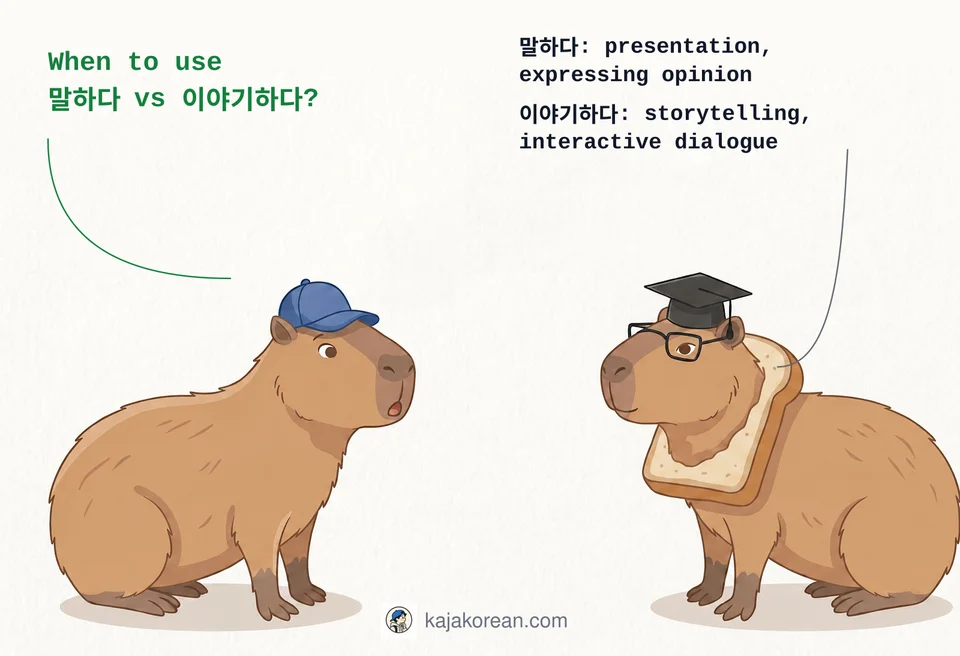
When to use

expressing opinion, presentation, simple information delivery

The nuance

말하다 is used simply to convey or express speech, regardless of conversational format or depth of content.

이야기하다(i-ya-gi-ha-da, iyagihada)

Used when exchanging content with someone or having a conversation/storytelling.

When to use

friendly conversation, storytelling, interactive dialogue

The nuance

이야기하다 is used in situations involving conversational exchange or storytelling, conveying intimacy or communication.

Real-world examples

  • 그는 내게 자신의 생각을 말했어요.

    geu-neun nae-ge ja-sin-ui saeng-gak-eul mal-haess-eo-yo., geu neun nae ge ja sin ui saeng gak eul mal haess eo yo.

    Appropriate use of 말하다 for simply expressing an opinion.

  • 그는 내게 자신의 생각을 이야기했어요.

    geu-neun nae-ge ja-sin-ui saeng-gak-eul i-ya-gi-haess-eo-yo., geu neun nae ge ja sin ui saeng gak eul i ya gi haess eo yo.

    ‘이야기하다’ is better for interactive dialogue or storytelling, not simple opinion expression.

  • 친구와 어젯밤에 재미있는 이야기를 했어요.

    chin-gu-wa eo-jes-bam-e jae-mi-iss-neun i-ya-gi-reul haess-eo-yo., chin gu wa eo jes bam e jae mi iss neun i ya gi reul haess eo yo.

    Suitable use of 이야기하다 for an interactive conversation with a friend.

  • 친구와 어젯밤에 재미있는 말을 했어요.

    chin-gu-wa eo-jes-bam-e jae-mi-iss-neun mal-eul haess-eo-yo., chin gu wa eo jes bam e jae mi iss neun mal eul haess eo yo.

    ‘말하다’ does not emphasize intimacy or depth of content, making it unnatural here.

  • 발표할 때는 정확하게 말해야 합니다.

    bal-pyo-hal ttae-neun jeong-hwak-ha-ge mal-hae-ya hap-ni-da., bal pyo hal ttae neun jeong hwak ha ge mal hae ya hap ni da.

    말하다 is appropriate for presentations or formal situations.

  • 발표할 때는 정확하게 이야기해야 합니다.

    bal-pyo-hal ttae-neun jeong-hwak-ha-ge i-ya-gi-hae-ya hap-ni-da., bal pyo hal ttae neun jeong hwak ha ge i ya gi hae ya hap ni da.

    이야기하다 is not suitable for one-way communication like presentations.

  • 어머니께서 어릴 적 이야기를 들려주셨어요.

    eo-meo-ni-kke-seo eo-ril jeok i-ya-gi-reul deul-ryeo-ju-syeoss-eo-yo., eo meo ni kke seo eo ril jeok i ya gi reul deul ryeo ju syeoss eo yo.

    Natural use of 이야기하다 in storytelling situations.

  • 어머니께서 어릴 적 말을 들려주셨어요.

    eo-meo-ni-kke-seo eo-ril jeok mal-eul deul-ryeo-ju-syeoss-eo-yo., eo meo ni kke seo eo ril jeok mal eul deul ryeo ju syeoss eo yo.

    말하다 does not convey the nuance of storytelling.

Quick quiz

  1. Which word do you use for a relaxed conversation with a friend?

    친구와 편안한 대화를 나눌 때 어떤 단어를 쓰나요?(chin-gu-wapyeon-an-handae-hwa-reulna-nulttaeeo-tteondan-eo-reulsseu-na-yo?, chinguwapyeonanhandaehwareulnanulttaeeotteondaneoreulsseunayo?)
  2. Which word is appropriate for expressing opinions in a formal presentation?

    공식 발표에서 의견을 표현할 때 적절한 단어는?(gong-sikbal-pyo-e-seoui-gyeon-eulpyo-hyeon-halttaejeok-jeol-handan-eo-neun?, gongsikbalpyoeseouigyeoneulpyohyeonhalttaejeokjeolhandaneoneun?)
  3. Which word is mainly used when telling a story?

    스토리텔링을 할 때 주로 쓰는 단어는?(seu-to-ri-tel-ring-eulhalttaeju-rosseu-neundan-eo-neun?, seutoritelringeulhalttaejurosseuneundaneoneun?)

What does it mean?

More comparisons to explore

View all word comparisons →