
이(i)
Used to indicate people, objects, or situations near the speaker.
When to use
Near speaker, Object in current conversation, Possession of speaker
The nuance
Used to point to something close to the speaker, regardless of the listener’s position.
이 (i) · 그 (geu) · 저 (jeo)
이 (i), 그 (geu), and 저 (jeo) are demonstratives differing by speaker and listener proximity and context.
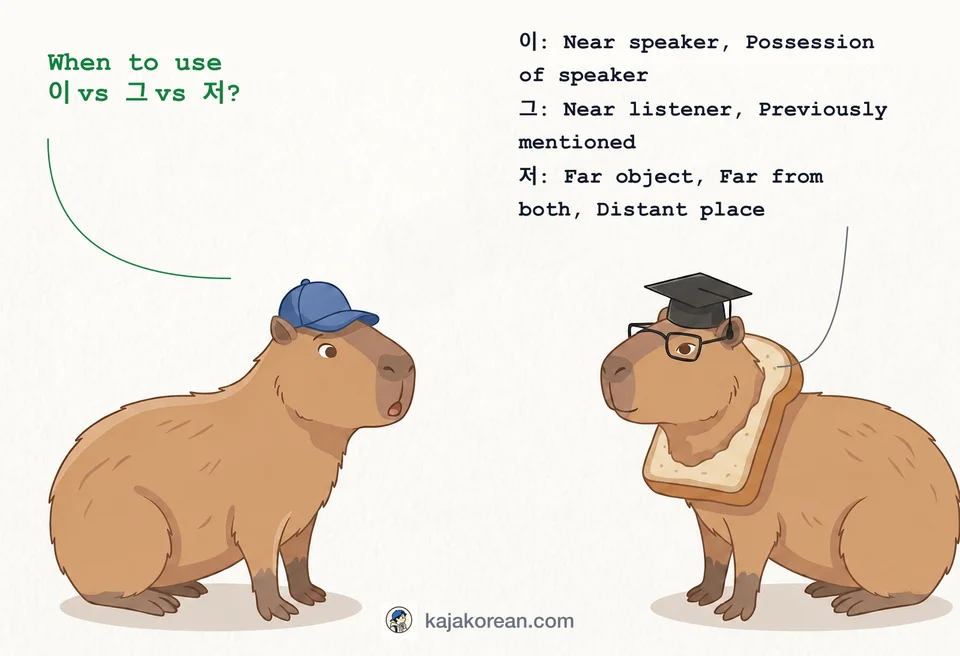
One lane per word — no nested boxes, just the gist.
Used to indicate people, objects, or situations near the speaker.
When to use
Near speaker, Object in current conversation, Possession of speaker
The nuance
Used to point to something close to the speaker, regardless of the listener’s position.
Used to indicate something near the listener or previously mentioned, or related to the listener.
When to use
Near listener, Previously mentioned, Possession of listener
The nuance
Used to point to something near the listener or previously mentioned in conversation.
Used to indicate something far from both speaker and listener.
When to use
Far from both, Distant place, Far object
The nuance
Used to point to something distant from both speaker and listener.
이 책은 재미있어요.
i chaek-eun jae-mi-iss-eo-yo., i chaek eun jae mi iss eo yo.
'이' is correct because the book is near the speaker.
그 책은 재미있어요.
geu chaek-eun jae-mi-iss-eo-yo., geu chaek eun jae mi iss eo yo.
'그' is correct because the book is near the listener.
저 책은 재미있어요.
jeo chaek-eun jae-mi-iss-eo-yo., jeo chaek eun jae mi iss eo yo.
'저' is correct because the book is far from both.
이 책은 네 책이에요.
i chaek-eun ne chaek-i-e-yo., i chaek eun ne chaek i e yo.
'그' should be used to indicate the listener’s possession, not '이'.
그 집은 내 집이에요.
geu jip-eun nae jip-i-e-yo., geu jip eun nae jip i e yo.
'이' should be used for speaker’s possession, not '그'.
저 사람은 내 친구예요.
jeo sa-ram-eun nae chin-gu-ye-yo., jeo sa ram eun nae chin gu ye yo.
'저' is correct for something far from both speaker and listener.
그 사람은 내 친구예요.
geu sa-ram-eun nae chin-gu-ye-yo., geu sa ram eun nae chin gu ye yo.
'그' is correct for something near the listener.
이 사람은 내 친구예요.
i sa-ram-eun nae chin-gu-ye-yo., i sa ram eun nae chin gu ye yo.
'이' is correct for something near the speaker.
Which demonstrative is used for objects near the speaker?
Which word points to something near the listener or previously mentioned?
Which demonstrative indicates something far from both speaker and listener?
What does it mean?