입국하다 vs 입국되다: Active vs Passive Nuance

입국하다 (ip-guk-ha-da, ipgukhada) · 입국되다 (ip-guk-doe-da, ipgukdoeda)

입국하다 (ipgukhada) expresses the subject actively entering a country, while 입국되다 (ipgukdoeda) indicates the entry is passively or externally processed.

Comparison of 입국하다 and 입국되다 usage in Korean

Word-by-word breakdown

One lane per word — no nested boxes, just the gist.

입국하다(ip-guk-ha-da, ipgukhada)

Subject actively entering a country

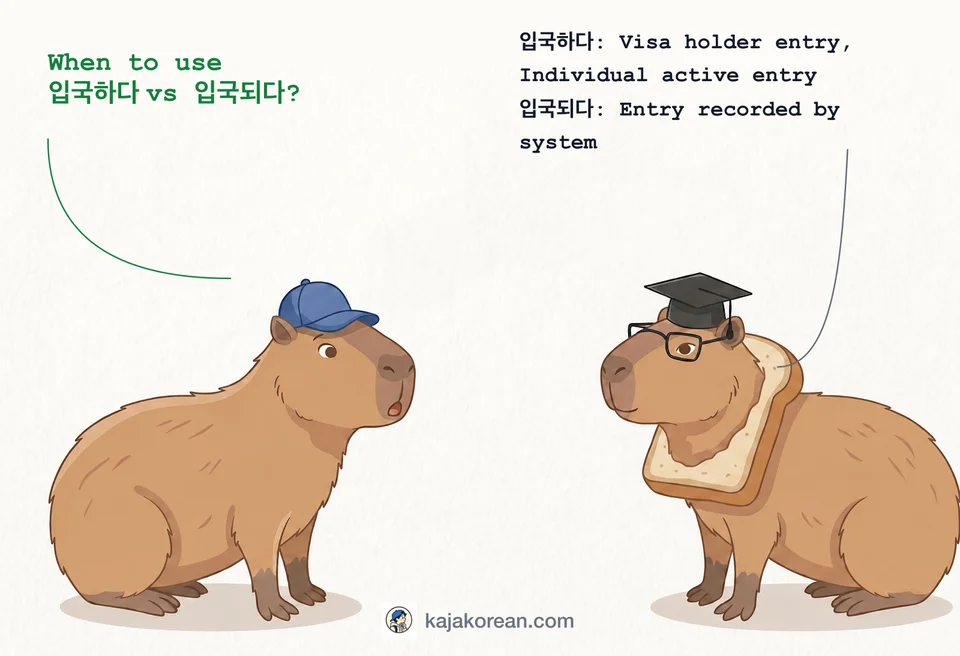
When to use

Individual active entry, Passport control passed, Visa holder entry

The nuance

Use 입국하다 when the person actively enters the country. It expresses the subject's active action.

입국되다(ip-guk-doe-da, ipgukdoeda)

Entry is processed or occurs passively by an external agent

When to use

Automatic entry processing, Entry recorded by system, Entry permission completed

The nuance

Use 입국되다 when the entry process is handled by external agencies or systems, indicating passive action by the subject.

Real-world examples

  • 나는 내일 한국에 입국한다.

    na-neun nae-il han-guk-e ip-guk-han-da., na neun nae il han guk e ip guk han da.

    The subject actively enters the country, so 입국하다 is correct.

  • 비자가 승인되어 입국되었다.

    bi-ja-ga seung-in-doe-eo ip-guk-doe-eoss-da., bi ja ga seung in doe eo ip guk doe eoss da.

    Entry was passively processed through approval, so 입국되다 fits.

  • 그는 입국되었다.

    geu-neun ip-guk-doe-eoss-da., geu neun ip guk doe eoss da.

    Using 입국되다 alone for a person is unnatural; 입국하다 is correct.

  • 여권 심사를 통과하고 입국했다.

    yeo-gwon sim-sa-reul tong-gwa-ha-go ip-guk-haess-da., yeo gwon sim sa reul tong gwa ha go ip guk haess da.

    Subject actively enters, so 입국하다 is correct.

  • 자동 시스템에 의해 입국되었다.

    ja-dong si-seu-tem-e ui-hae ip-guk-doe-eoss-da., ja dong si seu tem e ui hae ip guk doe eoss da.

    Entry processed passively by system, so 입국되다 is correct.

  • 나는 입국되었다.

    na-neun ip-guk-doe-eoss-da., na neun ip guk doe eoss da.

    For active subject action, 입국하다 must be used, not 입국되다.

  • 그녀는 입국 허가를 받았고 입국했다.

    geu-nyeo-neun ip-guk heo-ga-reul bat-ass-go ip-guk-haess-da., geu nyeo neun ip guk heo ga reul bat ass go ip guk haess da.

    Active entry by subject requires 입국하다.

  • 입국되었다고 말하는 대신 입국했다고 말하는 것이 자연스럽다.

    ip-guk-doe-eoss-da-go mal-ha-neun dae-sin ip-guk-haess-da-go mal-ha-neun geos-i ja-yeon-seu-reop-da., ip guk doe eoss da go mal ha neun dae sin ip guk haess da go mal ha neun geos i ja yeon seu reop da.

    입국하다 is more natural for active entry in daily speech.

Quick quiz

  1. Which word to use when the subject actively enters the country by plane?

    주체가 직접 비행기로 나라에 들어갈 때 어떤 단어를 써야 하나요?(ju-che-gajik-jeopbi-haeng-gi-rona-ra-edeul-eo-galttaeeo-tteondan-eo-reulsseo-yaha-na-yo?, juchegajikjeopbihaenggironaraedeuleogalttaeeotteondaneoreulsseoyahanayo?)
  2. Which expression fits when entry is processed by an automatic system?

    입국 절차가 자동 시스템에 의해 처리될 때 적절한 표현은?(ip-gukjeol-cha-gaja-dongsi-seu-tem-eui-haecheo-ri-doelttaejeok-jeol-hanpyo-hyeon-eun?, ipgukjeolchagajadongsiseutemeuihaecheoridoelttaejeokjeolhanpyohyeoneun?)
  3. Is '그는 이미 입국되었다' natural?

    '그는 이미 입국되었다' 문장은 자연스러운가?('geu-neuni-miip-guk-doe-eoss-da'mun-jang-eunja-yeon-seu-reo-un-ga?, 'geuneunimiipgukdoeeossda'munjangeunjayeonseureounga?)

More comparisons to explore

View all word comparisons →