
아니(a-ni, ani)
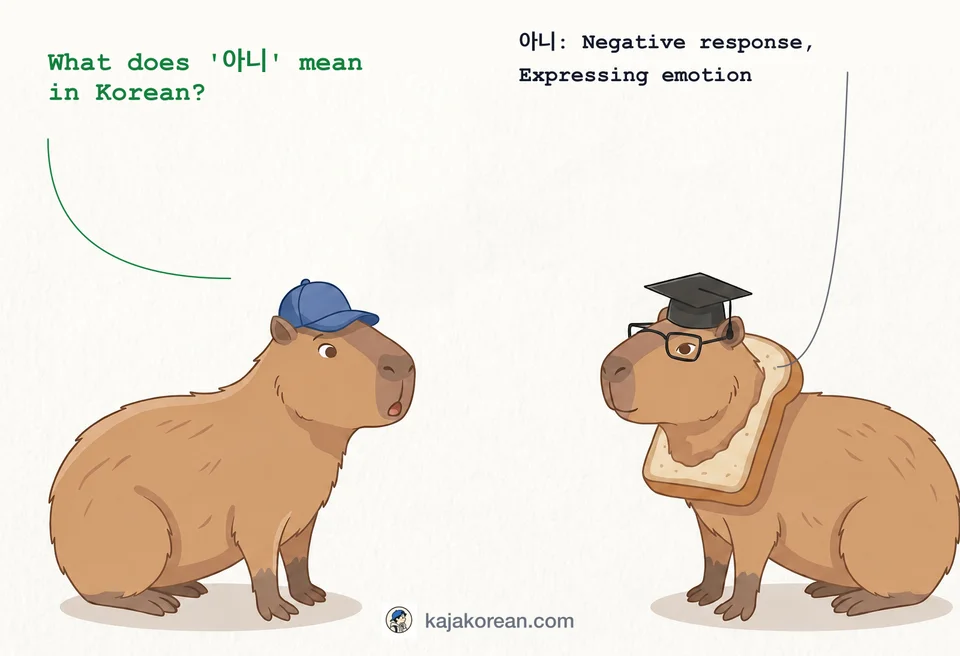
'아니' is a shortened form of '아니다' used to negate facts or states. Alone, it functions as a negative response like 'no,' and within sentences, it conveys negation.
Nuances
- Used alone as a simple negative answer.
- Within sentences, it emphasizes negation.
- '아니요' is more appropriate in formal contexts.
- Can express surprise or contradiction sometimes.
When to use
Everyday conversation, Negative response, Expressing emotion
In context
'아니' is mainly used independently as a negative response or as an adverb expressing negation within a sentence. In formal situations, '아니요' is preferred, while '아니' sounds natural in casual conversation. It often appears at sentence endings to negate.