What does 어제 mean?

어제 (eo-je, eoje)

어제 (eoje) means 'yesterday,' the day before today. It's very common in daily Korean.

Calendar showing the day before today

Definition & nuance

Core meaning and shades learners miss.

어제(eo-je, eoje)

어제 (eoje) means 'yesterday,' referring to the day immediately before today.

Nuances

  • Means simply the day before today but also emphasizes past events
  • Used with past tense verbs to clarify time context
  • Naturally used in both informal and formal speech

When to use

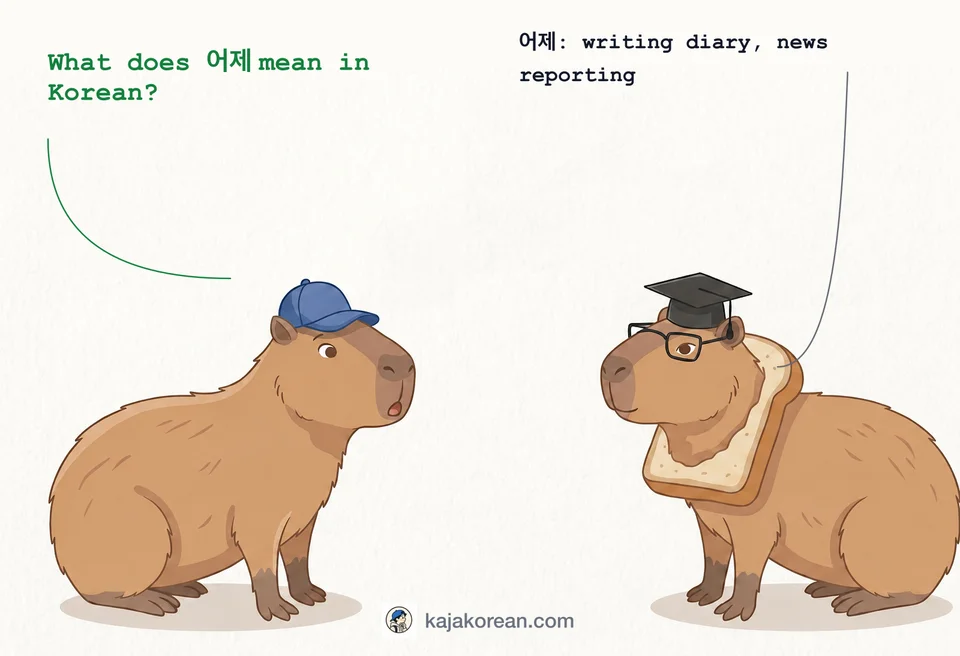
daily conversation, writing diary, news reporting

In context

어제 functions as a time adverb in sentences, specifying when an action or state occurred. It is used naturally in both formal and informal contexts.

Real-world examples

  • 어제 친구를 만났어요.

    eo-je chin-gu-reul man-nass-eo-yo., eo je chin gu reul man nass eo yo.

    '어제' correctly indicates the day before today and fits naturally with the past tense verb 'met'.

  • 어제는 날씨가 정말 좋았어요.

    eo-je-neun nal-ssi-ga jeong-mal joh-ass-eo-yo., eo je neun nal ssi ga jeong mal joh ass eo yo.

    '어제' clearly marks the time for the past weather condition.

  • 내일 어제 갈 거예요.

    nae-il eo-je gal geo-ye-yo., nae il eo je gal geo ye yo.

    '어제' means past day, so it cannot be used with future time '내일'.

  • 어제 밥을 먹어요.

    eo-je bap-eul meok-eo-yo., eo je bap eul meok eo yo.

    '먹어요' is present tense but '어제' refers to past, so tense mismatch.

Quick quiz

  1. What time does 어제 refer to?

    어제는 어떤 시간을 말하나요?(eo-je-neuneo-tteonsi-gan-eulmal-ha-na-yo?, eojeneuneotteonsiganeulmalhanayo?)
  2. Which sentence is correct?

    다음 중 올바른 문장은?(da-eumjungol-ba-reunmun-jang-eun?, daeumjungolbareunmunjangeun?)

More meaning guides

View all meaning guides →