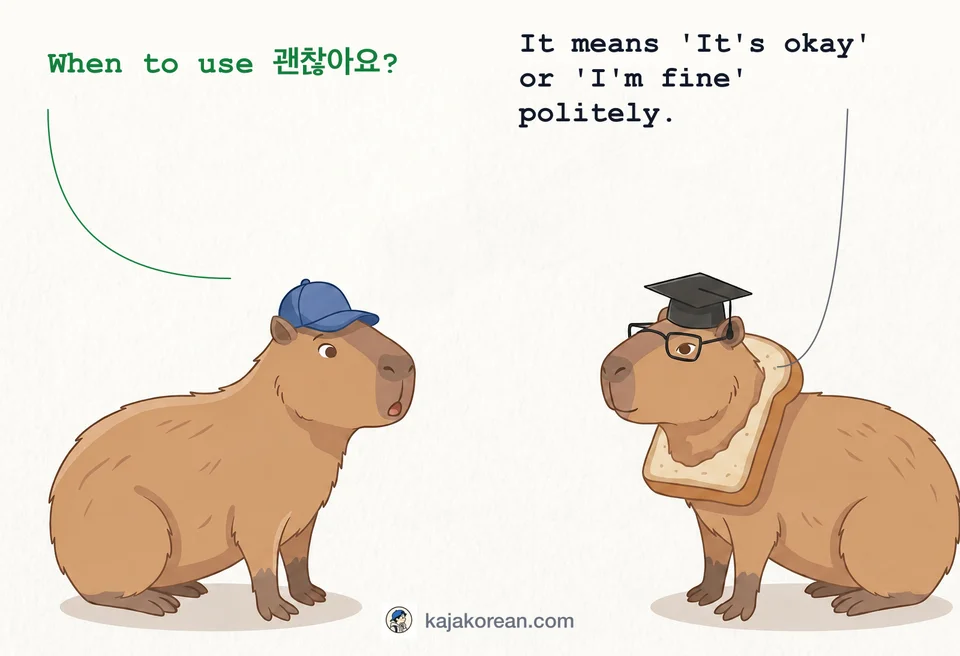
What does 괜찮아요 mean?

괜찮아요 (gwaen-chan-a-yo, gwaenchanayo)

‘괜찮아요’ (gwaenchanh-ayo) is a common phrase meaning 'it's okay' or 'I'm fine' in everyday Korean.

Meaning of 괜찮아요 in Korean

Definition & nuance

Core meaning and shades learners miss.

괜찮아요(gwaen-chan-a-yo, gwaenchanayo)

‘괜찮아요’ is the polite form of ‘괜찮다’, meaning something is okay or in a good state.

Nuances

  • Positive meaning indicating someone's condition is good
  • Soft refusal when declining
  • Accepting an apology
  • Polite form of ‘괜찮다’ showing respect

When to use

Asking about well-being, Responding to apologies, Giving permission

In context

‘괜찮아요’ is used to ask about someone's condition, give permission, or respond to apologies. It is polite and fits both formal and casual contexts.

Real-world examples

  • A: 오늘 기분 어때요? B: 괜찮아요.

    a: o-neul gi-bun eo-ttae-yo? b: gwaen-chan-a-yo., a: o neul gi bun eo ttae yo? b: gwaen chan a yo.

    ‘괜찮아요’ correctly expresses a good state.

  • A: 이거 먹어도 돼요? B: 괜찮아요.

    a: i-geo meok-eo-do dwae-yo? b: gwaen-chan-a-yo., a: i geo meok eo do dwae yo? b: gwaen chan a yo.

    ‘괜찮아요’ is used to give permission politely.

  • A: 미안해요, 늦었어요. B: 괜찮아요.

    a: mi-an-hae-yo, neuj-eoss-eo-yo. b: gwaen-chan-a-yo., a: mi an hae yo, neuj eoss eo yo. b: gwaen chan a yo.

    ‘괜찮아요’ naturally accepts an apology.

  • A: 이거 필요해요? B: 아니요, 괜찮아요.

    a: i-geo pil-yo-hae-yo? b: a-ni-yo, gwaen-chan-a-yo., a: i geo pil yo hae yo? b: a ni yo, gwaen chan a yo.

    ‘괜찮아요’ is used softly to refuse.

  • A: 괜찮아요? B: 네, 괜찮아요.

    a: gwaen-chan-a-yo? b: ne, gwaen-chan-a-yo., a: gwaen chan a yo? b: ne, gwaen chan a yo.

    ‘괜찮아요’ is appropriate for asking and answering well-being.

  • A: 괜찮아요? B: 아니요, 괜찮아요.

    a: gwaen-chan-a-yo? b: a-ni-yo, gwaen-chan-a-yo., a: gwaen chan a yo? b: a ni yo, gwaen chan a yo.

    ‘No, it's okay’ is contradictory and unnatural.

Quick quiz

  1. What is the correct meaning of ‘괜찮아요’?

    ‘괜찮아요’의 올바른 의미는 무엇인가요?(‘gwaen-chan-a-yo’uiol-ba-reunui-mi-neunmu-eos-in-ga-yo?, ‘gwaenchanayo’uiolbareunuimineunmueosingayo?)
  2. When can you use ‘괜찮아요’?

    ‘괜찮아요’를 언제 사용할 수 있나요?(‘gwaen-chan-a-yo’reuleon-jesa-yong-halsuiss-na-yo?, ‘gwaenchanayo’reuleonjesayonghalsuissnayo?)
  3. Is ‘괜찮아요’ a polite form?

    ‘괜찮아요’의 존댓말 형태인가요?(‘gwaen-chan-a-yo’uijon-daes-malhyeong-tae-in-ga-yo?, ‘gwaenchanayo’uijondaesmalhyeongtaeingayo?)

More meaning guides

View all meaning guides →