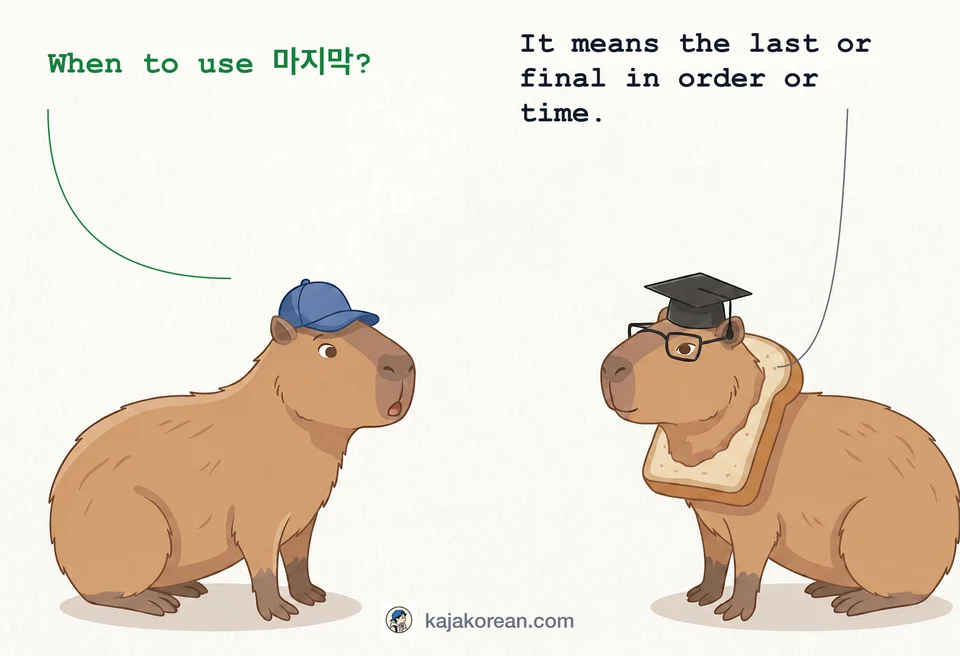
What does 마지막 mean?

마지막 (ma-ji-mak, majimak)

마지막 (majimak) means the very end in order or time. It's common in daily life and business.

The Korean word 마지막 meaning last or final

Definition & nuance

Core meaning and shades learners miss.

마지막(ma-ji-mak, majimak)

마지막 means the very end in a sequence or time, like last person or last chance.

Nuances

  • emphasizes temporal end
  • indicates last in order
  • refers to decisive moment or chance

When to use

daily conversation, business meeting, event deadline

In context

마지막 is a noun usually used as '마지막 + noun'. It can function as subject, object, or adverbial phrase. It fits both formal and informal contexts naturally.

Real-world examples

  • ⭕ 마지막 사람이 도착했어요.

    ⭕ ma-ji-mak sa-ram-i do-chak-haess-eo-yo., ⭕ ma ji mak sa ram i do chak haess eo yo.

    ‘마지막’ before ‘사람’ correctly means the person who is last in order.

  • ⭕ 회의는 마지막 10분 동안 집중하세요.

    ⭕ hoe-ui-neun ma-ji-mak 10bun dong-an jip-jung-ha-se-yo., ⭕ hoe ui neun ma ji mak 10bun dong an jip jung ha se yo.

    ‘마지막’ properly indicates the final part of a time period.

  • ❌ 마지막에 먹었어요 사과를.

    ❌ ma-ji-mak-e meok-eoss-eo-yo sa-gwa-reul., ❌ ma ji mak e meok eoss eo yo sa gwa reul.

    The word order is unnatural; ‘마지막에’ and ‘사과를’ are misplaced.

  • ⭕ 이게 마지막 기회예요.

    ⭕ i-ge ma-ji-mak gi-hoe-ye-yo., ⭕ i ge ma ji mak gi hoe ye yo.

    ‘마지막’ correctly modifies ‘기회’.

  • ❌ 마지막이 책을 읽었어요.

    ❌ ma-ji-mak-i chaek-eul ik-eoss-eo-yo., ❌ ma ji mak i chaek eul ik eoss eo yo.

    ‘마지막이’ is not a proper subject here; sentence is unnatural.

  • ⭕ 마지막 날에는 모두 모여요.

    ⭕ ma-ji-mak nal-e-neun mo-du mo-yeo-yo., ⭕ ma ji mak nal e neun mo du mo yeo yo.

    ‘마지막 날’ naturally means the final day in time.

Quick quiz

  1. What does ‘마지막’ mean?

    ‘마지막’의 뜻은 무엇인가요?(‘ma-ji-mak’uitteus-eunmu-eos-in-ga-yo?, ‘majimak’uitteuseunmueosingayo?)
  2. Which sentence is correct?

    어떤 문장이 올바른가요?(eo-tteonmun-jang-iol-ba-reun-ga-yo?, eotteonmunjangiolbareungayo?)
  3. What does ‘마지막 기회’ mean?

    ‘마지막 기회’의 의미는?(‘ma-ji-makgi-hoe’uiui-mi-neun?, ‘majimakgihoe’uiuimineun?)

More meaning guides

View all meaning guides →