What does 보고 싶다 mean?

보고 싶다 (bo-gosip-da, bogosipda)

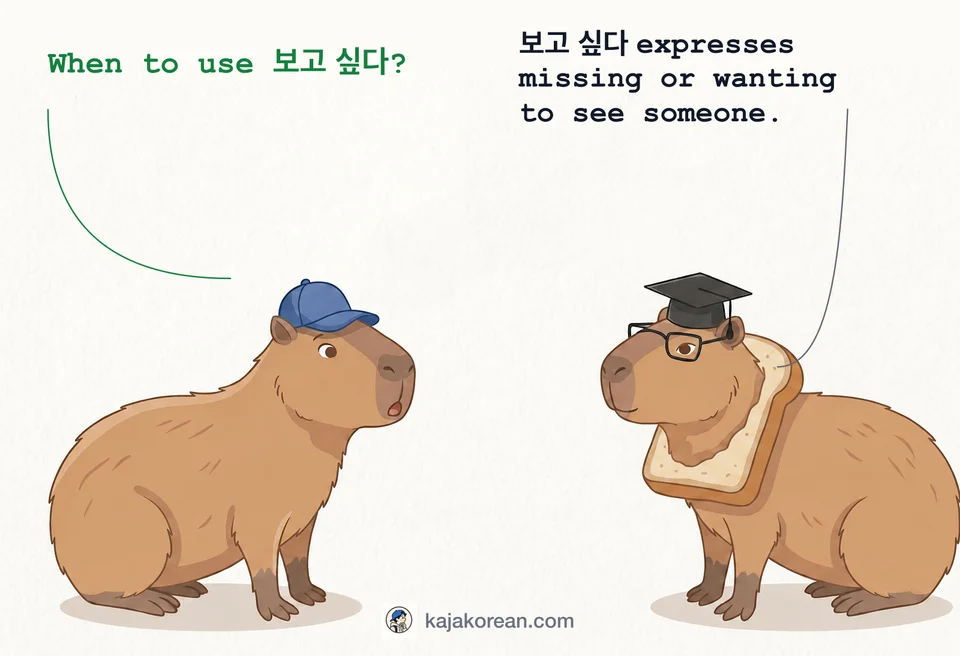
보고 싶다 (bogo sipda) expresses missing someone or wanting to see them.

Korean phrase 보고 싶다 meaning missing someone

Definition & nuance

Core meaning and shades learners miss.

보고 싶다(bo-gosip-da, bogosipda)

보고 싶다 means 'to want to see someone' or 'to miss someone,' expressing emotional longing for another person.

Nuances

  • Includes emotional longing, not just desire to meet
  • Used when someone is far or hasn't been seen for a long time
  • Conveys a warm, friendly feeling
  • More suitable for casual conversation than formal contexts

When to use

Talking with friends, Expressing longing to family, Between lovers, Thinking of someone separated

In context

보고 싶다 is used after the object to form '누구를 보고 싶다' (want to see someone). It’s common in informal or polite speech expressing desire or longing. Past: 보고 싶었다, Future: 보고 싶을 거다.

Real-world examples

  • 엄마 보고 싶어요.

    eom-ma bo-go sip-eo-yo., eom ma bo go sip eo yo.

    Clear subject and object; natural emotional expression.

  • 친구를 보고 싶다.

    chin-gu-reul bo-go sip-da., chin gu reul bo go sip da.

    Subject is omitted but grammatically correct.

  • 보고 싶다 친구.

    bo-go sip-da chin-gu., bo go sip da chin gu.

    Object must come before the verb in Korean; word order is wrong.

  • 나는 보고 싶다 너.

    na-neun bo-go sip-da neo., na neun bo go sip da neo.

    '너를 보고 싶다' is correct; this sentence is awkward.

  • 오래간만에 친구가 너무 보고 싶었어요.

    o-rae-gan-man-e chin-gu-ga neo-mu bo-go sip-eoss-eo-yo., o rae gan man e chin gu ga neo mu bo go sip eoss eo yo.

    Proper use of past tense and emotional expression.

  • 그 사람을 보고 싶을 거예요.

    geu sa-ram-eul bo-go sip-eul geo-ye-yo., geu sa ram eul bo go sip eul geo ye yo.

    Natural future tense expression.

Quick quiz

  1. What does '보고 싶다' mean?

    '보고 싶다'의 뜻은 무엇인가요?('bo-gosip-da'uitteus-eunmu-eos-in-ga-yo?, 'bogosipda'uitteuseunmueosingayo?)
  2. Which sentence is correct?

    다음 중 올바른 문장은?(da-eumjungol-ba-reunmun-jang-eun?, daeumjungolbareunmunjangeun?)
  3. What is the past tense of '보고 싶다'?

    ‘보고 싶다’의 과거형은?(‘bo-gosip-da’uigwa-geo-hyeong-eun?, ‘bogosipda’uigwageohyeongeun?)

More meaning guides

View all meaning guides →