
일상(il-sang, ilsang)
Everyday routine or ordinary daily life
When to use
personal life, casual conversation, daily routine talk
The nuance
Use 일상 to talk about ordinary personal daily life. It’s informal and friendly.
일상 (il-sang, ilsang) · 비즈니스 (bi-jeu-ni-seu, bijeuniseu) · 학술 (hak-sul, haksul)
일상, 비즈니스, and 학술 are used respectively in everyday life, business contexts, and academic fields, so it’s crucial to choose the right word based on the situation.
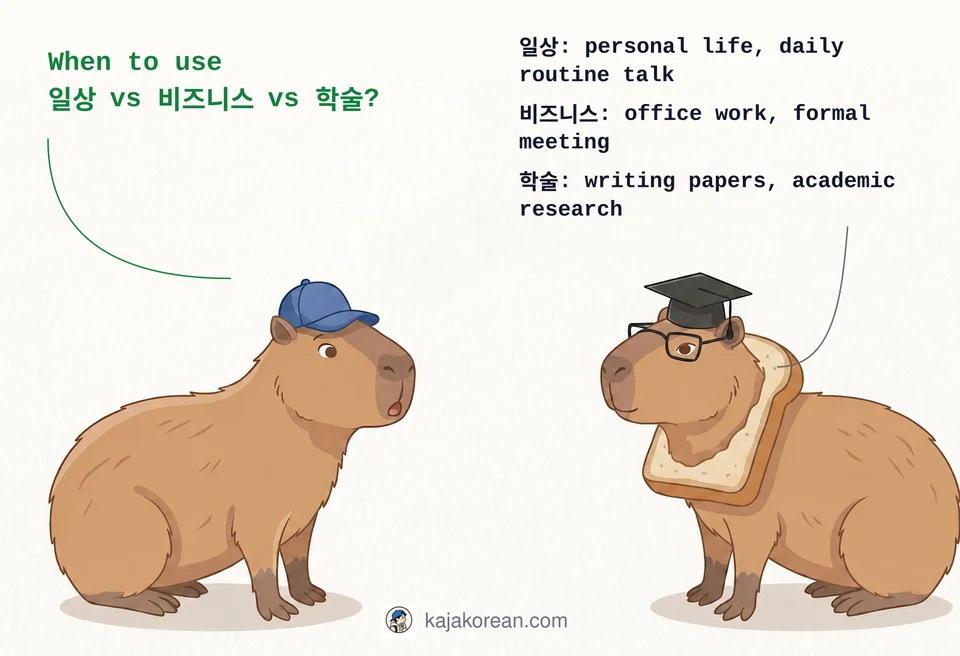
One lane per word — no nested boxes, just the gist.
Everyday routine or ordinary daily life
When to use
personal life, casual conversation, daily routine talk
The nuance
Use 일상 to talk about ordinary personal daily life. It’s informal and friendly.
Official and professional contexts related to work or business
When to use
office work, business negotiation, formal meeting
The nuance
Use 비즈니스 in formal, professional contexts related to companies, deals, or work; not casual.
Specialized, systematic knowledge or activities related to academia, research, or education
When to use
academic research, writing papers, conference presentations
The nuance
Use 학술 exclusively for academic, research, or scholarly contexts like papers or conferences; not everyday talk.
요즘 일상이 너무 바빠서 친구를 못 만나요.
yo-jeum il-sang-i neo-mu ba-ppa-seo chin-gu-reul mos man-na-yo., yo jeum il sang i neo mu ba ppa seo chin gu reul mos man na yo.
일상 refers to personal everyday life, so this sentence is natural.
비즈니스 미팅에서 친구들과 수다를 떨었어요.
bi-jeu-ni-seu mi-ting-e-seo chin-gu-deul-gwa su-da-reul tteol-eoss-eo-yo., bi jeu ni seu mi ting e seo chin gu deul gwa su da reul tteol eoss eo yo.
Business meetings are formal, so chatting casually is inappropriate; work-related talk fits better.
학술 논문을 준비하며 밤새 연구했어요.
hak-sul non-mun-eul jun-bi-ha-myeo bam-sae yeon-gu-haess-eo-yo., hak sul non mun eul jun bi ha myeo bam sae yeon gu haess eo yo.
학술 fits perfectly with research and paper preparation.
오늘은 비즈니스 일상을 공유할게요.
o-neul-eun bi-jeu-ni-seu il-sang-eul gong-yu-hal-ge-yo., o neul eun bi jeu ni seu il sang eul gong yu hal ge yo.
Combining business and daily life is awkward; 일상 is limited to personal life.
학술 모임에서 친구들과 만나서 즐거웠어요.
hak-sul mo-im-e-seo chin-gu-deul-gwa man-na-seo jeul-geo-woss-eo-yo., hak sul mo im e seo chin gu deul gwa man na seo jeul geo woss eo yo.
Academic meetings are professional, so casual friend meetings are inappropriate here.
비즈니스 계약을 체결하기 위해 회의를 했습니다.
bi-jeu-ni-seu gye-yak-eul che-gyeol-ha-gi wi-hae hoe-ui-reul haess-seup-ni-da., bi jeu ni seu gye yak eul che gyeol ha gi wi hae hoe ui reul haess seup ni da.
비즈니스 suits formal situations like deals and contracts.
일상에서 스트레스를 푸는 방법을 찾고 있어요.
il-sang-e-seo seu-teu-re-seu-reul pu-neun bang-beop-eul chaj-go iss-eo-yo., il sang e seo seu teu re seu reul pu neun bang beop eul chaj go iss eo yo.
일상 means personal daily life, so this is appropriate.
학술적인 주제로 친구들과 수다를 떨었어요.
hak-sul-jeok-in ju-je-ro chin-gu-deul-gwa su-da-reul tteol-eoss-eo-yo., hak sul jeok in ju je ro chin gu deul gwa su da reul tteol eoss eo yo.
Academic topics are professional, so casual chatting with friends is inappropriate.
Which word fits talking about an ordinary day with a friend?
Which word is used during business deal negotiations at work?
Which word fits presenting research at an academic conference?
Is it appropriate to casually chat with friends on academic topics?