Mastering the Differences: 속어 vs 비속어 vs 은어

속어 (sok-eo, sokeo) · 비속어 (bi-sok-eo, bisokeo) · 은어 (eun-eo, euneo)

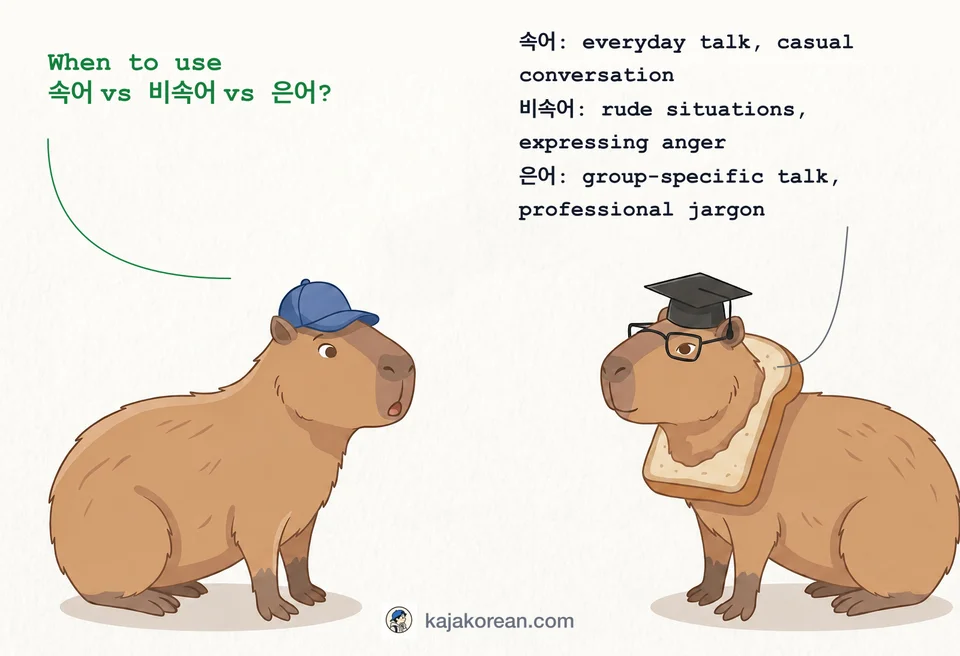
속어 (sok-eo) are informal everyday slang, 비속어 (bi-sok-eo) are rude or offensive words, and 은어 (eun-eo) are secretive terms used within specific groups.

Comparison of Korean slang words 속어, 비속어, 은어

Word-by-word breakdown

One lane per word — no nested boxes, just the gist.

속어(sok-eo, sokeo)

Informal, friendly slang used in everyday life

When to use

casual conversation, everyday talk, friendly informal expression

The nuance

속어 is used naturally in informal situations and does not necessarily include rude or offensive meanings.

비속어(bi-sok-eo, bisokeo)

Informal and offensive words including swear words or rude expressions

When to use

using swear words, expressing anger, rude situations

The nuance

비속어 is limited to swear words or vulgar expressions that may insult or offend others.

은어(eun-eo, euneo)

Secretive or specialized terms understood only within specific groups or professions

When to use

group-specific talk, professional jargon, secretive communication

The nuance

은어 is used exclusively within specific groups and is obscure or secretive to outsiders.

Real-world examples

  • 이건 친구들끼리 쓰는 속어야. ⭕

    i-geon chin-gu-deul-kki-ri sseu-neun sok-eo-ya. ⭕, i geon chin gu deul kki ri sseu neun sok eo ya. ⭕

    It's an informal, friendly expression among friends, so 속어 is appropriate.

  • 그 사람 욕할 때 비속어를 많이 썼다. ⭕

    geu sa-ram yok-hal ttae bi-sok-eo-reul man-i sseoss-da. ⭕, geu sa ram yok hal ttae bi sok eo reul man i sseoss da. ⭕

    Includes swear words or rude expressions, so 비속어 is correct.

  • 경찰들만 아는 은어가 많다. ⭕

    gyeong-chal-deul-man a-neun eun-eo-ga man-da. ⭕, gyeong chal deul man a neun eun eo ga man da. ⭕

    Secretive terms understood only by a specific profession, so 은어 is correct.

  • 속어는 무조건 욕설이다. ❌

    sok-eo-neun mu-jo-geon yok-seol-i-da. ❌, sok eo neun mu jo geon yok seol i da. ❌

    속어 includes friendly informal expressions, not just swear words.

  • 비속어는 모든 은어를 포함한다. ❌

    bi-sok-eo-neun mo-deun eun-eo-reul po-ham-han-da. ❌, bi sok eo neun mo deun eun eo reul po ham han da. ❌

    비속어 is limited to offensive words; 은어 is distinct secretive jargon.

  • 은어는 일상 대화에서 자주 쓴다. ❌

    eun-eo-neun il-sang dae-hwa-e-seo ja-ju sseun-da. ❌, eun eo neun il sang dae hwa e seo ja ju sseun da. ❌

    은어 is used only within specific groups, not in general conversation.

  • 비속어를 친구들과 친근하게 쓴다. ❌

    bi-sok-eo-reul chin-gu-deul-gwa chin-geun-ha-ge sseun-da. ❌, bi sok eo reul chin gu deul gwa chin geun ha ge sseun da. ❌

    비속어 is rude or offensive, so it's inappropriate for friendly use.

  • 속어는 특정 직업 집단에서만 이해된다. ❌

    sok-eo-neun teuk-jeong jik-eop jip-dan-e-seo-man i-hae-doen-da. ❌, sok eo neun teuk jeong jik eop jip dan e seo man i hae doen da. ❌

    속어 is informal slang understood by the general public, not limited groups.

Quick quiz

  1. Which is used casually among friends?

    친구들끼리 편하게 쓰는 말은?(chin-gu-deul-kki-ripyeon-ha-gesseu-neunmal-eun?, chingudeulkkiripyeonhagesseuneunmaleun?)
  2. Which word means swear or rude words?

    욕설이나 무례한 표현을 뜻하는 단어는?(yok-seol-i-namu-rye-hanpyo-hyeon-eultteus-ha-neundan-eo-neun?, yokseolinamuryehanpyohyeoneultteushaneundaneoneun?)
  3. Which word means secretive terms known only to specific groups?

    특정 집단만 아는 비밀스러운 용어는?(teuk-jeongjip-dan-mana-neunbi-mil-seu-reo-unyong-eo-neun?, teukjeongjipdanmananeunbimilseureounyongeoneun?)

More comparisons to explore

View all word comparisons →